

Main Points In Hindi (मुख्य बातें – हिंदी में)
-
भारत के चावल निर्यात पर प्रतिबंध हटाना: भारत ने एक महीने पहले चावल के निर्यात प्रतिबंध और निर्यात शुल्क को हटा दिया है, लेकिन नेपाल में चावल की कीमतें अभी भी कम नहीं हुई हैं। व्यापारियों का मानना है कि धान की फसल शुरू होने के बाद कीमतें घट सकती हैं।
-
नेपाल में चावल की मांग और कीमत: अधिकांश नेपाली लोग भारत से आयातित उच्च गुणवत्ता वाले चावल का सेवन करते हैं, जबकि घरेलू उत्पादन सीमित है। प्रतिबंध हटने के बावजूद, कुछ चावल की किस्मों की कीमतों में केवल मामूली कमी आई है।
-
तस्करी का मुद्दा: भारत-नेपाल सीमा पर चावल की तस्करी बढ़ी है। रिपोर्टों के अनुसार, बांग्लादेशी तस्कर सस्ते रेट पर चावल की तस्करी कर रहे हैं, जिससे नेपाल में सरकारी राजस्व और स्थानीय चावल मिलों को नुकसान हो रहा है।
-
धान की फसल और उत्पादन: नेपाल में धान की रोपाई जून-जुलाई में होती है और काटाई अक्टूबर-नवंबर में की जाती है। हालांकि, हाल की बाढ़ और भूस्खलन के कारण धान के उत्पादन पर असर पड़ सकता है, जिससे खाद्य सुरक्षा को खतरा हो सकता है।
- भारत की चावल निर्यात क्षमता: भारत दुनिया का सबसे बड़ा चावल निर्यातक है, जिसकी हिस्सेदारी 40 प्रतिशत से अधिक है। सरकार ने निर्यात पर न्यूनतम मूल्य निर्धारित किया है, जो नेपाल के चावल बाजार को प्रभावित करेगा।
Main Points In English(मुख्य बातें – अंग्रेज़ी में)
Here are the main points derived from the text provided:
-
Lifting of Export Restrictions: More than a month after India lifted the ban on rice exports and removed export duties, there has been no significant decrease in rice prices in the domestic market of Nepal.
-
Dependency on Indian Rice: Most urban residents in Nepal consume fine and long-grain rice imported from India, as the production of these expensive varieties is minimal in Nepal.
-
Price Predictions: Nepalese traders anticipate that rice prices may decline in the coming weeks due to the commencement of the paddy harvesting season, typically starting in October-November.
-
Statistics on Imports: Nepal imported rice and paddy worth 22 billion rupees during the previous financial year and had substantial imports in earlier years, highlighting the country’s reliance on Indian rice.
- Impact of Smuggling: There is a significant increase in rice smuggling from India to Nepal, with reports indicating that only 40% of rice imports are formal, leading to economic repercussions for government revenue and local rice mills.

Complete News In Hindi(पूरी खबर – हिंदी में)
भारत द्वारा एक महीने से अधिक समय पहले चावल निर्यात प्रतिबंध हटाने और निर्यात शुल्क हटाने के बावजूद, घरेलू बाजार में कीमतों में कमी आने से इनकार कर दिया गया है।
नेपाल के अधिकांश शहरी निवासी भारत से आयातित और नेपाल में पैक किए गए बढ़िया और लंबे दाने वाले चावल खाते हैं, क्योंकि देश इन महंगी किस्मों का बहुत कम उत्पादन करता है।
हालाँकि, नेपाली व्यापारियों का कहना है कि धान की फसल शुरू होने के कारण कुछ हफ्तों में कीमतें कम हो सकती हैं। जुलाई के मध्य में समाप्त हुए पिछले वित्तीय वर्ष में नेपाल ने 22 अरब रुपये मूल्य के चावल और धान का आयात किया, हालांकि भारत ने घरेलू आपूर्ति सुनिश्चित करने और कीमतों को नियंत्रण में रखने के लिए जुलाई 2023 में गैर-बासमती चावल के निर्यात पर प्रतिबंध लगा दिया था।
2021-22 में भारत से चावल और धान का आयात 47.35 अरब रुपये का था। इससे पहले, 2020-21 में आयात पर 50.48 अरब रुपये का बिल आया था।
भारत द्वारा प्रतिबंध लगाए जाने के तुरंत बाद, नेपाल में चावल की कीमत 200 रुपये से 250 रुपये प्रति 25 किलोग्राम बैग तक बढ़ गई।
बंपर फसल के अनुमान के बाद 27 सितंबर को प्रतिबंध हटा लिया गया, लेकिन न्यूनतम निर्यात मूल्य लागू कर दिया गया। नई दिल्ली ने गैर-बासमती सफेद चावल निर्यात के लिए न्यूनतम निर्यात मूल्य 490 डॉलर प्रति टन निर्धारित किया है।
हालाँकि, भारत सरकार ने उबले चावल के निर्यात पर शुल्क 20 प्रतिशत से घटाकर 10 प्रतिशत कर दिया।
23 अक्टूबर को विदेश व्यापार महानिदेशालय द्वारा जारी एक अधिसूचना के अनुसार, भारत ने सभी प्रकार के करों को हटाते हुए न्यूनतम निर्यात मूल्य और शुल्क को समाप्त कर दिया।
कृष्णभोग चावल के उत्पादक राधा कृष्ण राइस मिल के कार्यकारी निदेशक विभोर अग्रवाल ने कहा, “जैसा कि भारत ने चावल की बंपर पैदावार का अनुमान लगाया है, उसने चावल निर्यात प्रतिबंध और सभी कर हटा दिए हैं।”
उन्होंने कहा, “नई फसल बाजार में पहुंचने के बाद चावल की कीमत कम हो जाएगी।” धान की रोपाई जून-जुलाई में की जाती है और कटाई अक्टूबर-नवंबर में की जाती है।
भारत ने अभी तक धान की नई दर तय नहीं की है। अग्रवाल ने कहा, ”नई दर नेपाल में कीमत तय करेगी।”
हालांकि, व्यापारियों का कहना है कि जीरा मासिनो चावल की कीमत, प्रति 25 किलोग्राम बैग 2,500 रुपये, घटकर 2,400 रुपये हो गई है, जो कि मात्र 100 रुपये की गिरावट है।
प्रतिबंध से पहले, जीरा मासिनो चावल की कीमत 1,600 रुपये प्रति 25 किलोग्राम थी।
घरेलू चावल व्यापारियों ने कहा कि प्रतिबंध हटने के बाद उन्होंने चावल का आयात शुरू कर दिया है।
अग्रवाल ने कहा कि घरेलू व्यापारियों ने काठमांडू में सामान्य चावल का 25 किलोग्राम का बैग 2,100 रुपये से 2,150 रुपये में बेचना शुरू कर दिया है।
सोना मंसुली को छोड़कर, घरेलू उत्पादकों द्वारा प्रीमियम जीरा मासिनो के तहत कतरनी चावल की कीमत अभी तक तय नहीं की गई है। अग्रवाल ने कहा, ”इसलिए जीरा मासिनो चावल मौजूदा दर पर बेचा जा रहा है।”
अग्रवाल ने कहा, “चूंकि हमारे पास पुराना स्टॉक बचा हुआ है, जिसे हमने भारत को 20 प्रतिशत निर्यात शुल्क और नेपाली सीमा शुल्क को 7 प्रतिशत शुल्क का भुगतान करके आयात किया है, हम मौजूदा दर पर बेच रहे हैं।”
अग्रवाल ने कहा, चूंकि भारत ने 20 प्रतिशत निर्यात शुल्क हटा दिया है, इसलिए कीमत 300 रुपये प्रति बैग कम हो जाएगी। 20 प्रतिशत निर्यात शुल्क की लागत 500 से 600 रुपये प्रति बैग है।
नेपाल में, दक्षिणी पड़ोसी द्वारा मुख्य अनाज के निर्यात पर प्रतिबंध लगाने के बाद से भारत से नेपाल चावल की तस्करी खतरनाक स्तर तक बढ़ गई है।
अंतर्राष्ट्रीय खाद्य नीति अनुसंधान संस्थान के साथ साझेदारी में साउथ एशिया वॉच ऑन ट्रेड, इकोनॉमिक्स एंड एनवायरनमेंट (SAWTEE) द्वारा तैयार किए गए शोध, ‘नेपाल और भारत के बीच कृषि उत्पादों में अनौपचारिक सीमा पार व्यापार की गतिशीलता’ से पता चला कि केवल 40 प्रतिशत औपचारिक माध्यम से भारत से नेपाल में चावल का आयात किया जाता है।
घरेलू चावल उत्पादकों ने कहा कि अनुमान है कि विभिन्न नेपाल-भारत सीमा बिंदुओं से प्रतिदिन लगभग 8,000 बैग चावल (25-30 किलोग्राम आकार) की नेपाल में तस्करी की जा रही है।
रिपोर्ट्स के मुताबिक, तस्कर साइकिल पर चावल की सप्लाई करते हैं और एक तस्कर ऐसा दिन में 10 बार तक करता है। कर चुकाकर आयातित चावल की तुलना में तस्करी का चावल सस्ता है।
तस्करी ने नेपाल में सरकारी करों और चावल मिलों की आय को प्रभावित किया है।
“त्योहार के कारण हमने धान का नया स्टॉक आयात नहीं किया है। नया स्टॉक बिना शुल्क और कर के आएगा, ”अग्रवाल ने कहा।
भारत दुनिया का सबसे बड़ा चावल निर्यातक है, जिसकी हिस्सेदारी 40 प्रतिशत से अधिक है।
अल नीनो घटना के बावजूद, नेपाली किसानों ने पिछले वित्तीय वर्ष में 5.72 मिलियन टन धान की कटाई की।
कृषि मंत्रालय के अधिकारियों के अनुसार, सितंबर के अंत में भारी बारिश के कारण नेपाल के अधिकांश हिस्सों में बाढ़ और भूस्खलन के कारण इस साल धान का उत्पादन थोड़ा प्रभावित हो सकता है।
गुरुवार को गृह मंत्रालय के तहत राष्ट्रीय आपदा जोखिम न्यूनीकरण और प्रबंधन प्राधिकरण द्वारा जारी प्रारंभिक हानि और क्षति मूल्यांकन रिपोर्ट के अनुसार, 26 से 28 सितंबर तक बाढ़ और भूस्खलन से 65,380 हेक्टेयर कृषि भूमि और 26,698 पशुधन प्रभावित हुए, जिसके परिणामस्वरूप अनुमानित आर्थिक क्षति हुई। 5.88 अरब रुपये का नुकसान।
रिपोर्ट में कहा गया है कि कृषि पर महत्वपूर्ण प्रभाव से खाद्य सुरक्षा और किसानों की आजीविका को खतरा है, जो आय के लिए अपनी भूमि और पशुधन पर बहुत अधिक निर्भर हैं।
Complete News In English(पूरी खबर – अंग्रेज़ी में)
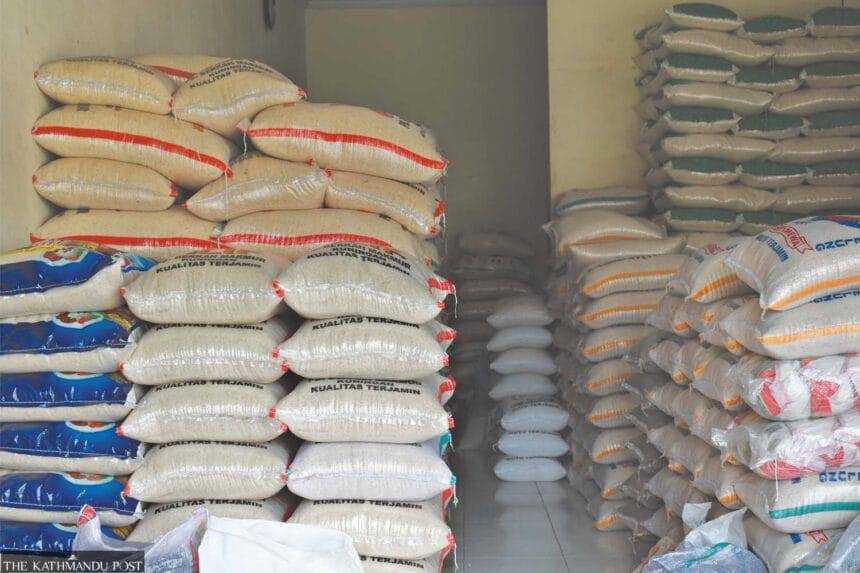
India lifted its ban on rice exports and removed export duties over a month ago, yet prices in the domestic market have not decreased. Most urban residents in Nepal consume high-quality, long-grain rice imported from India, as the country produces very little of these costly varieties.
Nepalese traders believe that prices may drop in a few weeks due to the upcoming rice harvest. In the previous financial year, which ended in mid-July, Nepal imported rice and paddy worth 22 billion rupees. However, in July 2023, India imposed a ban on non-basmati rice exports to ensure domestic supply and control prices.
In the fiscal year 2021-22, the import of rice and paddy from India was valued at 47.35 billion rupees, slightly down from 50.48 billion rupees in 2020-21. Following the ban, rice prices in Nepal surged to between 200 and 250 rupees for a 25-kilogram bag.
The ban was lifted on September 27, after a bumper crop was forecast, but a minimum export price was set. India established a minimum price of $490 per ton for non-basmati white rice exports. Furthermore, the Indian government reduced the export duty on boiled rice from 20% to 10%.
On October 23, an official notification from the Directorate General of Foreign Trade stated that India had eliminated export duties and minimum price regulations for all types of rice. Vibhor Agarwal, executive director at Radha Krishna Rice Mill, noted that India anticipated a good harvest, which led to the removal of rice export restrictions and taxes.
He predicted that rice prices would decrease once the new crop reaches the market. Rice planting occurs in June-July and harvesting takes place in October-November. However, India has not yet set new prices for rice, which will dictate market pricing in Nepal.
Despite the expectation of decreased prices, traders noted that the cost of Jeera Masino rice has only dropped slightly from 2,500 rupees to 2,400 rupees for a 25-kilogram bag, a mere 100 rupee reduction from before. Before the ban, Jeera Masino rice was priced at 1,600 rupees for the same quantity.
Domestic rice traders indicated that they have resumed rice imports following the lifting of the ban. Agarwal mentioned that they are selling a standard 25-kilogram bag of rice in Kathmandu for around 2,100 to 2,150 rupees. However, the price for premium Jeera Masino rice has not yet been established, except for Sona Mansuli variety, leading to continued sales at existing rates.
Agarwal explained that due to leftover old stock, which was imported with a 20% export duty and a 7% Nepali customs charge, they are selling at current rates. He also mentioned that eliminating the 20% export duty would reduce prices by about 300 rupees per bag, as the cost of that duty typically ranged from 500 to 600 rupees per bag.
Since India’s ban on exporting main grains, illegal smuggling of rice from India to Nepal has surged. According to research prepared by South Asia Watch on Trade, Economics, and Environment (SAWTEE) in partnership with the International Food Policy Research Institute, only about 40% of the rice imported from India reaches Nepal through formal channels.
It is estimated that around 8,000 bags of rice (25-30 kilograms each) are smuggled daily through various border points between Nepal and India. Reports indicate that smugglers frequently deliver rice on bicycles, with some making up to ten trips in a day. Smuggled rice is cheaper than legally imported rice that incurs taxes.
This smuggling has negatively impacted government revenues and the income of rice mills in Nepal. Agarwal noted that they have not imported new stock due to the festival season, but any new stock would arrive without taxes and duties.
India is the world’s largest rice exporter, holding over 40% of the market share. Despite the El Niño phenomenon, Nepalese farmers harvested 5.72 million tons of rice last financial year. However, officials at the Ministry of Agriculture say this year’s rice production may be slightly affected due to severe flooding and landslides caused by heavy rains in late September.
An initial damage and loss assessment report from the National Disaster Risk Reduction and Management Authority stated that flooding and landslides during September 26-28 affected 65,380 hectares of agricultural land and 26,698 livestock, leading to an estimated economic loss of 5.88 billion rupees. The report highlights that such significant impacts on agriculture jeopardize food security and the livelihoods of farmers who heavily rely on their land and livestock for income.
Source link