

Main Points In Hindi (मुख्य बातें – हिंदी में)
-
पाकिस्तान की गेहूं उत्पादन पर निर्भरता: पाकिस्तान की अर्थव्यवस्था और खाद्य सुरक्षा गेहूं पर बहुत हद तक निर्भर है, जिसकी उत्पादन में वृद्धि की आवश्यकता निरंतर बढ़ रही है। हर साल उत्पादकता 1.8 प्रतिशत की दर से बढ़ रही है।
-
सिंध प्रांत में प्रमाणित बीज की कमी: सिंध, जो प्रमुख गेहूं उत्पादक प्रांत है, में किसानों को प्रमाणित गेहूं के बीज की उपलब्धता में कठिनाइयों का सामना करना पड़ रहा है, जिसके कारण उत्पादकता में कमी आ रही है।
-
प्रमाणित बीजों की मांग और आपूर्ति का अंतर: पाकिस्तान में प्रमाणित गेहूं बीज की राष्ट्रीय आवश्यकता 1.1 मिलियन मीट्रिक टन प्रतिवर्ष है, जबकि वर्तमान में इस आवश्यकता को पूरा करने के लिए उपलब्ध बीज का हिस्सा आधे से भी कम है। सिंध में केवल 25-35 प्रतिशत गेहूं के बीज प्रमाणित हैं।
-
बीज वितरण नेटवर्क की कमी: सिंध में बीज वितरण नेटवर्क और उच्च गुणवत्ता वाले बीजों के उत्पादन की कमी है, जिससे किसान प्रमाणित बीज प्राप्त करने में संघर्ष कर रहे हैं। इससे छोटे किसानों पर नकारात्मक प्रभाव पड़ रहा है, क्योंकि प्रमाणित बीज महंगे होते हैं।
- गुणवत्ता नियंत्रण में विसंगतियाँ: बीज प्रमाणीकरण की प्रक्रिया में विसंगतियाँ हैं और नियमों का सही तरीके से पालन नहीं किया जाता, जिससे किसानों को घटिया बीजों का सामना करना पड़ता है और उनकी फसल का प्रदर्शन खराब होता है।
Main Points In English(मुख्य बातें – अंग्रेज़ी में)
Here are the main points summarized from the text regarding wheat production and challenges in Pakistan, particularly in the Sindh province:
-
Dependence on Wheat for Food Security: Pakistan’s economy and food security largely depend on wheat as a staple crop. There is a growing need to enhance wheat production to feed the increasing population, which has been expanding at a rate of 1.8 percent annually.
-
Challenges in Certified Seed Availability: Farmers in Sindh face significant difficulties in accessing certified wheat seeds. These seeds are crucial for improving yield, disease resistance, and overall agricultural productivity due to their strict quality control standards.
-
Productivity Impact: The lack of access to certified seeds has resulted in reduced productivity levels, with a reported decrease of approximately 10-15 tons per acre. Many farmers rely on borrowing seeds and are largely dependent on local dealers, leading to a focus on low-quality seeds.
-
Discrepancy in Seed Supply: The demand for certified wheat seeds exceeds availability, with a gap exceeding 50 percent. Pakistan’s estimated annual requirement for certified seeds is around 1.1 million metric tons, but the country struggles to meet this need, producing less than half from approved sources.
- Need for Collaborative Solutions: The issues of inadequate certified seed distribution, high production costs, and quality control discrepancies require a collaborative effort between the government, private sector, and agricultural extension agencies to ensure that farmers in Sindh have access to the necessary certified seeds to boost their yields and livelihoods.

Complete News In Hindi(पूरी खबर – हिंदी में)
पाकिस्तान की अर्थव्यवस्था और खाद्य सुरक्षा काफी हद तक गेहूं पर निर्भर है, जो देश की मुख्य फसलों में से एक है। जनसंख्या को खिलाने के लिए उत्पादकता में वृद्धि के माध्यम से गेहूं उत्पादन का विस्तार करने की आवश्यकता बढ़ रही है, जो हर साल 1.8 प्रतिशत की दर से बढ़ रही है।
प्रमुख गेहूं उत्पादक प्रांतों में से एक के रूप में, सिंध ने हमेशा देश के गेहूं उत्पादन में महत्वपूर्ण योगदान दिया है। हालाँकि, सिंध में किसानों को प्रमाणित गेहूं के बीज की उपलब्धता को लेकर कठिनाइयों का सामना करना पड़ रहा है।
प्रमाणित बीज फसल की पैदावार, रोग प्रतिरोधक क्षमता और कृषि उत्पादन में वृद्धि करते हैं। शुद्धता, अंकुरण दर और रोग-मुक्त स्थिति सुनिश्चित करने के लिए प्रमाणित गेहूं के बीज सख्त गुणवत्ता नियंत्रण मानकों के तहत विकसित किए गए हैं। वे उच्च गुणवत्ता वाली फसलें प्रदान करते हैं, जिससे खाद्य सुरक्षा और किसानों की आय में सुधार होता है। उनके मूल्य के बावजूद, सिंध में कई किसानों को प्रमाणित गेहूं बीज प्राप्त करने में कठिनाई होती है, जिसके परिणामस्वरूप उत्पादकता कम होती है।
प्रगतिशील किसानों के अनुसार, इससे उत्पादकता लगभग 10-15 टन प्रति एकड़ बढ़ जाती है। किसानों ने दावा किया: “वे दो एकड़ जमीन पर बीज बोकर अपने बीज की व्यवस्था कर सकते हैं और फिर अगले सीजन में इसका उपयोग कर सकते हैं, लेकिन आमतौर पर इससे बचते हैं। किसान अपने स्वयं के गुणवत्ता वाले बीजों को आसानी से बढ़ा सकते हैं।” छोटे किसान ज्यादातर उधार पर बीज खरीदने के लिए इनपुट डीलरों पर निर्भर रहते हैं। इसलिए, वे अधिकतर अपने द्वारा उपलब्ध कराए गए बीजों पर निर्भर रहते हैं। वे गुणवत्तापूर्ण बीज पर इतना ध्यान नहीं दे पाते।
प्रमाणित बीज की मांग और उपलब्धता के बीच का अंतर लगातार 50 प्रतिशत से अधिक हो गया है, जिससे गेहूं की पैदावार कम हो गई है, खासकर सिंध में
हाल के अनुमानों के अनुसार, प्रमाणित गेहूं बीज के लिए पाकिस्तान की राष्ट्रीय आवश्यकता लगभग 1.1 मिलियन मीट्रिक टन सालाना है। हालाँकि, देश इस आवश्यकता को पूरा करने के लिए संघर्ष कर रहा है, अनुमोदित बीज स्रोतों के लिए कुल गेहूं बीज आवश्यकताओं का आधे से भी कम हिस्सा है।
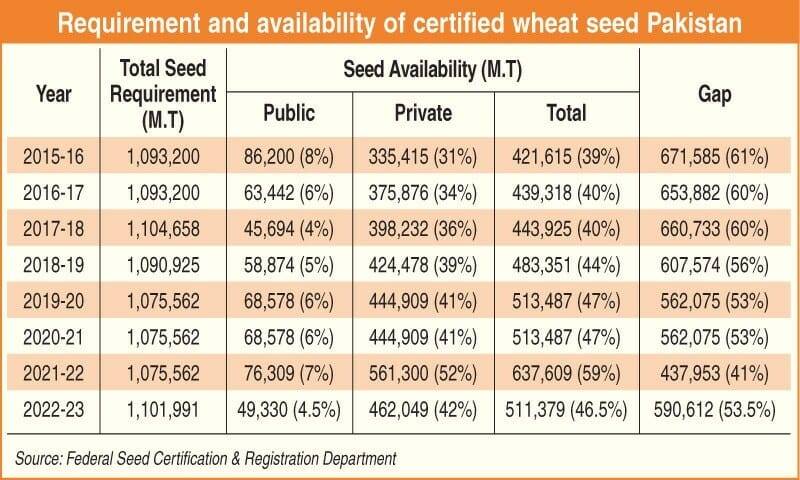
संघीय बीज प्रमाणीकरण और पंजीकरण विभाग के आंकड़ों के अनुसार, पिछले आठ वर्षों में, आधिकारिक स्रोतों से 39-47 प्रतिशत प्रमाणित गेहूं बीज उपलब्ध हुआ है। शेष बीज या तो किसानों द्वारा बचाया जाता है या अन्य किसानों, बिचौलियों, या गांव की दुकानों (तालिका देखें) से प्राप्त किया जाता है, जहां किस्म का स्रोत आमतौर पर अज्ञात होता है।
प्रमाणित बीजों की उपलब्धता में पिछले दशक में बहुत अधिक सुधार नहीं हुआ है, 39 प्रतिशत से 47 प्रतिशत के बीच; आवश्यकता और उपलब्धता के बीच का अंतर लगातार 50 प्रतिशत से अधिक रहा है। अधिकांश प्रमाणित बीज (31-42 प्रतिशत) निजी क्षेत्र से आते हैं।
सिंध में स्थिति ज्यादा गंभीर है. सर्वेक्षण रिपोर्टों के अनुसार, प्रांत में उगाए गए केवल 25-35 प्रतिशत गेहूं के बीज प्रमाणित हैं, बाकी अप्रमाणित या किसानों द्वारा बचाए गए बीज हैं। प्रमाणित बीज की उपलब्धता में कमी पाकिस्तान के अन्य गेहूं उगाने वाले क्षेत्रों की तुलना में सिंध में गेहूं की कम पैदावार में योगदान देने वाला एक प्रमुख कारक है।
अपर्याप्त प्रमाणित बीज वितरण नेटवर्क, उच्च गुणवत्ता वाले बीजों का अपर्याप्त उत्पादन, और तार्किक बाधाएँ प्रांत की बीज आपूर्ति को और सीमित कर देती हैं। किसान, विशेष रूप से ग्रामीण इलाकों में, प्रमाणित गेहूं बीज प्राप्त करने के लिए संघर्ष करते हैं, और जब वे कर सकते हैं, तो बीज आमतौर पर अप्रमाणित विकल्पों की तुलना में अधिक महंगे होते हैं, जिससे वे छोटे पैमाने के किसानों के लिए अप्राप्य हो जाते हैं।
आवश्यक बीज का केवल एक छोटा सा हिस्सा औपचारिक बीज उद्योग द्वारा उत्पादित किया जाता है, जिसमें सरकारी और निजी बीज निगम दोनों शामिल हैं – कम मात्रा उच्च लागत में योगदान करती है। इसके परिणामस्वरूप अप्रमाणित या कृषि-संरक्षित बीजों पर अत्यधिक निर्भरता होती है, जो अक्सर कम गुणवत्ता वाले होते हैं और कम पैदावार देते हैं।
गुणवत्ता नियंत्रण में विसंगतियाँ सिंध की बीज प्रमाणीकरण प्रक्रिया को प्रभावित करती हैं। हालाँकि बीज प्रमाणीकरण को नियंत्रित करने वाले नियम मौजूद हैं, लेकिन उन्हें सख्ती से लागू नहीं किया जाता है। बीज में मिलावट के मामले सामने आए हैं, जिसमें अनुमोदित बीजों को अप्रमाणित या घटिया बीजों के साथ मिलाया गया है, और इस गुणवत्ता समझौते के परिणामस्वरूप किसानों को कम फसल प्रदर्शन का अनुभव होता है।
सरकार, निजी क्षेत्र और कृषि विस्तार एजेंसियों को इन समस्याओं के समाधान के लिए मिलकर काम करना चाहिए और यह सुनिश्चित करना चाहिए कि सिंध के किसानों को अपनी उपज और आजीविका बढ़ाने के लिए आवश्यक प्रमाणित बीजों तक पहुंच प्राप्त हो।
डॉ. असलम मेमन PARC-सामाजिक विज्ञान अनुसंधान संस्थान, तंदोजम के निदेशक हैं और डॉ. मुहम्मद इस्माइल कुंभार सिंध कृषि विश्वविद्यालय तंदोजम में प्रोफेसर हैं।
डॉन, द बिजनेस एंड फाइनेंस वीकली, 18 नवंबर, 2024 में प्रकाशित
Complete News In English(पूरी खबर – अंग्रेज़ी में)
Pakistan’s economy and food security heavily rely on wheat, one of the country’s main crops. With the population growing at a rate of 1.8% each year, there is an increasing need to boost wheat production through improved productivity.
Sindh, a major wheat-producing province, has historically made significant contributions to the country’s wheat yield. However, farmers in Sindh face challenges in accessing certified wheat seeds.
Certified seeds enhance crop yield, disease resistance, and overall agricultural productivity. They are developed under strict quality control to ensure purity, germination rates, and disease-free status, resulting in high-quality crops that improve food security and farmers’ income. Despite their benefits, many farmers in Sindh struggle to obtain certified seeds, leading to lower productivity.
According to progressive farmers, using certified seeds can increase productivity by about 10-15 tons per acre. Farmers often state that they could manage seeds from their two-acre plots for reuse in the next season but generally avoid doing so, as they find it easier to grow their own quality seeds. Small farmers largely depend on input dealers for seed, limiting their focus on obtaining high-quality seeds.
The gap between the demand and availability of certified seeds has consistently exceeded 50%, contributing to lower wheat yields, particularly in Sindh.
Recent estimates suggest that Pakistan requires approximately 1.1 million metric tons of certified wheat seeds annually. However, the country struggles to meet this need, with less than half of the total wheat seed requirements being sourced from approved seed origins.
Data from the Federal Seed Certification and Registration Department shows that, over the past eight years, only 39-47% of certified wheat seeds have been available from official sources. The remainder is either saved by farmers or obtained from other farmers, intermediaries, or local shops, where the source of the variety is often unknown.
The improvement in the availability of certified seeds over the last decade has been minimal, ranging from 39% to 47%, with the gap between demand and supply remaining above 50%. The majority of certified seeds (31-42%) come from the private sector.
The situation in Sindh is more dire. According to survey reports, only 25-35% of the wheat seeds grown in the province are certified; the rest are uncertified or saved by farmers. The lack of certified seed availability is a significant factor in the lower wheat yields in Sindh compared to other wheat-growing regions in Pakistan.
An insufficient distribution network for certified seeds, inadequate production of high-quality seeds, and practical barriers further limit the province’s seed supply. Farmers, particularly in rural areas, struggle to obtain certified wheat seeds, and when they can, these seeds are often more expensive than uncertified options, making them unaffordable for small-scale farmers.
Only a small portion of the required seeds is produced by the formal seed industry, which includes both government and private seed corporations. This low volume contributes to high costs, resulting in a dependence on uncertified or saved seeds, which are often of lower quality and yield.
Discrepancies in quality control affect Sindh’s seed certification process. Although there are regulations governing seed certification, they are not strictly enforced. Incidents of seed contamination have occurred, with certified seeds being mixed with uncertified or inferior seeds, leading to poorer crop performance for farmers.
To address these issues, the government, private sector, and agricultural extension agencies must collaborate to ensure that farmers in Sindh have access to the certified seeds necessary to enhance their productivity and livelihoods.
Dr. Aslam Memon is the Director at PARC-Social Science Research Institute, Tandojam, and Dr. Muhammad Ismail Kumbhar is a Professor at Sindh Agricultural University, Tandojam.
This article was published in Dawn, The Business and Finance Weekly, on November 18, 2024.