


Main Points In Hindi (मुख्य बातें – हिंदी में)
-
नया रोग "पिटिंग और ब्लास्ट": इस नए रोग ने केले की फसल को गंभीर खतरा पैदा किया है, जो भारत के कई राज्यों में फैल रहा है, विशेषकर केरल, गुजरात और हाल ही में बिहार के सीतामढ़ी जिले में।
-
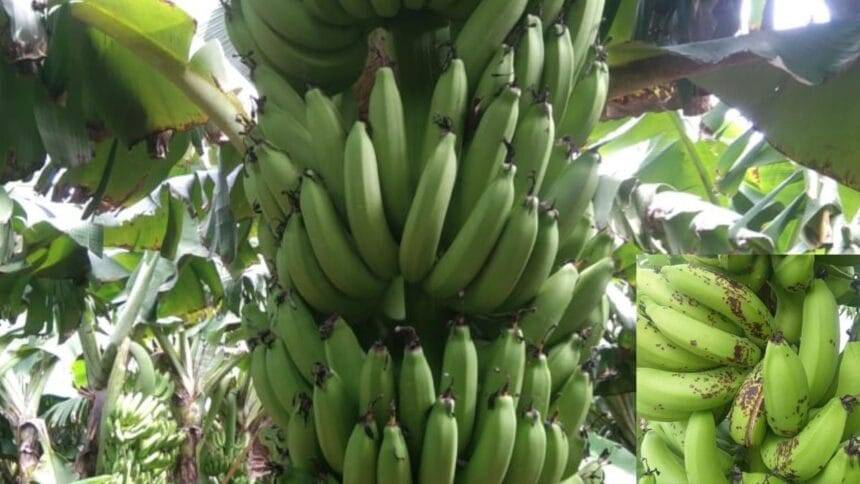
रोग के लक्षण और प्रभाव: इस रोग से केले की पत्तियों, तने और फलों पर सूरज की रोशनी के जैसे गड्ढे बन जाते हैं, जिससे केले का बाजार मूल्य घट जाता है और किसानों को फल को कम कीमत पर बेचना पड़ता है।
-
रोग की प्रसार के कारण: यह रोग फंगस "Pyricularia angulata" के कारण फैलता है और इसकी गंभीरता excessive बारिश, वातावरण में नमी और खेतों में पानी के ठहराव से बढ़ती है।
-
रोग से बचाव के सुझाव: रोग से बचने के लिए फसल का सही ढंग से प्रबंधन करना आवश्यक है, जैसे कि केले के पौधों के बीच उचित दूरी रखना, रोगग्रस्त पत्तियों को काटना, और खेतों में पानी का सही निकासी बनाना।
- फंगिसाइड का उपयोग: रोग के लक्षण दिखने पर, विशेष रूप से Nativo, Caprio, या Opera जैसे फंगिसाइड का उपयोग करने की सलाह दी गई है, ताकि रोग की तीव्रता को कम किया जा सके।
Main Points In English(मुख्य बातें – अंग्रेज़ी में)
Here are the main points regarding the banana pitting and blast disease discussed in the provided text:
-
Prevalence and Impact: Banana is a significant fruit crop in India, primarily cultivated in states like Kerala, Gujarat, and Bihar. The newly identified pitting and blast disease poses a severe threat, affecting older leaves and fruits, thus diminishing their market value due to the unattractive appearance caused by sunken pits.
-
Symptoms and Causes: The disease is characterized by the development of sunken pit-like spots on mature banana leaves and black spots on the main stem and bunches. The causative agent is a fungus named Pyricularia angulata, with spread exacerbated by excess rainfall, atmospheric moisture, and water stagnation in fields.
-
Expert Recommendations for Management: Dr. S.K. Singh emphasizes the importance of proactive management to prevent the disease. Key strategies include appropriate planting spacing for airflow, regular removal of suckers and diseased leaves, and ensuring proper drainage to mitigate moisture accumulation.
-
Fungicide Application: If symptoms appear, farmers are advised to use fungicides like Nativo, Caprio, or Opera, applying them twice at 15-day intervals. Copper oxychloride or mancozeb can also be used to reduce the disease’s intensity if applied correctly.
- Vigilance and Timely Management: Continuous monitoring for symptoms and timely intervention are crucial to safeguard the banana crop from the adverse effects of this emerging disease.

Complete News In Hindi(पूरी खबर – हिंदी में)
भारत में केला सबसे अधिक उगाया जाने वाला फल है और यह देश के प्रमुख फसलों में से एक है। हाल ही में “पिटिंग और ब्लास्ट” नामक एक नई बीमारी आई है, जो केले की फसल के लिए गंभीर खतरा बन सकती है। राजेंद्र प्रसाद केंद्रीय कृषि विश्वविद्यालय, पूसा, समस्तीपुर, बिहार के पौधों की रोग विज्ञान और नेमेटोलॉजी विभाग के प्रमुख ने कहा कि केला उगाने वाले किसानों को इस नई समस्या के प्रति बहुत सतर्क रहना चाहिए। भारत में केला फसल के लिए पिटिंग और ब्लास्ट बीमारी एक नई चुनौती बनकर उभरी है। अब तक यह बीमारी केवल केरल, गुजरात, और हाल ही में बिहार केSitamarhi जिले से पाई गई है। यह समस्या उत्तर प्रदेश के गाजीपुर में भी लगभग 50 एकड़ में सामने आई है। यह बीमारी विशेष रूप से पक्के पत्तों, मध्य रेखा, पत्ते के डंठल, पुष्पक्रम और केले के फलों पर हमला करती है। संक्रमण की दर 5 से 45 प्रतिशत के बीच देखी गई है। इस बीमारी के कारण केलों के गुच्छे पर धँसे हुए गड्ढे जैसे निशान बन जाते हैं, जिससे उसकी बाजार मूल्य में काफी कमी आती है। फल के खराब दिखने के कारण, किसान इसे बहुत कम दाम पर बेचने के लिए मजबूर होते हैं।
नई बीमारी के फैलने के कारण और लक्षण
केला खराब दिखने लगता है, पक्के पत्तों पर धँसे हुए गड्ढे जैसे धब्बे बनते हैं, और मुख्य तने और गुच्छे पर काले धब्बे दिखाई देते हैं। गुच्छा तोड़ने के बाद, केले का मध्य भाग काला हो जाता है। इसके खराब दिखने के कारण, किसान इसे कम दाम पर बेचने के लिए मजबूर होते हैं। यह बीमारी पहली बार सामने आई है और यह एक फंगस ‘Pyricularia angulata’ द्वारा होती है। इस बीमारी का नाम केला पिटिंग और ब्लास्ट रोग है। इस बीमारी के फैलने के मुख्य कारण अत्यधिक वर्षा, वातावरण में नमी, और खेतों में पानी जमा होना हैं। यह बीमारी घने बागों में और भी गंभीर रूप ले लेती है। इस समय इस नई बीमारी के बारे में जानकारी सीमित है और कृषि विस्तार कार्यकर्ताओं को इसे नियंत्रित करने के लिए ठोस सुझाव देने में कठिनाई हो रही है।
नई केले की बीमारियों से बचाने के लिए विशेषज्ञों की सलाह
डॉ. एस.के. सिंह ने इस बीमारी को रोकने के लिए सुझाव दिया है कि केले की फसल को शुरू से ही सावधानी से प्रबंधित किया जाए। सबसे पहले, केला पौधों को सही दूरी पर लगाया जाना चाहिए ताकि बाग में हवा और धूप आसानी से पहुंच सके। मुख्य तने के चारों ओर साइड साकर्स को नियमित रूप से काटकर बाग से हटा दिया जाना चाहिए ताकि बाग घना न हो और बीमारी फैलने की संभावनाएं कम हों। सूखे और बीमार पत्तों को समय-समय पर काटकर बाग से हटा देना चाहिए। खेतों में अच्छी जल निकासी होनी चाहिए ताकि बारिश का पानी तुरंत बह जाए और नमी जमा न हो।
यदि बीमारी के लक्षण दिखाई दें, तो 1 ग्राम किसी भी फंगिसाइड (जैसे Nativo, Caprio, या Opera) को एक लीटर पानी में मिलाकर गुच्छा पूरी तरह से निकलने के बाद 15 दिनों के अंतराल पर दो बार छिड़काव करें। यदि बीमारी की गंभीरता अधिक है, तो गुच्छा निकलने से पहले एक बार छिड़काव करें। तांबे के ऑक्सीक्लोराइड या मैंकोजेब को 2 ग्राम प्रति लीटर पानी में मिलाकर छिड़कने से बीमारी की तीव्रता कम होती है। इस नई बीमारी के प्रति सतर्क रहना और समय पर उचित प्रबंधन करना केला फसल को इस गंभीर बीमारी से बचाने के लिए बहुत महत्वपूर्ण है।
Complete News In English(पूरी खबर – अंग्रेज़ी में)
Banana is most cultivated in India, and is one of the major fruit producing crops of the country. Recently, a new disease called “pitting and blast” has arrived, which can become a serious threat to the banana crop. Head of the Department of Plant Pathology and Nematology, Rajendra Prasad Central Agricultural University, Pusa, Samastipur, Bihar said that farmers cultivating bananas need to be very alert about this new problem. For banana crop in India”pitting and blast disease Has emerged as a new challenge. So far the disease has been reported only from Kerala, Gujarat, and recently from Sitamarhi district of Bihar. This problem has also come to light in about 50 acres in Ghazipur, Uttar Pradesh. This disease specifically attacks the mature leaves, midrib, petiole, peduncle and fruits of banana. Its infection rate is seen ranging from 5 to 45 percent. Due to this disease, marks like sunken pits appear on the ripe bunch of banana, due to which its market value decreases significantly. Due to the bad appearance of the fruit, farmers are forced to sell it at throwaway prices.
Causes and symptoms of spread of new disease
Banana is looking ugly, sunken pit like spots are formed on the mature leaves, black spots are also visible on the main stem and the bunch. After plucking the bunch, the middle part of the banana turns black. Due to its poor appearance, farmers are forced to sell it at throwaway prices. This disease has come to light for the first time, he said that this disease is caused by a fungus named Pyricularia angulata. The name of this disease is banana pitting and blast disease. The main reasons for the spread of this disease are excessive rainfall, moisture in the atmosphere, and stagnation of water in the fields. This disease takes a more severe form in more dense gardens. At present, information about this new disease is limited and even agricultural extension workers are unable to give concrete suggestions on how to control it.
Expert’s suggestion to prevent new banana diseases
Dr. S.K. To prevent this disease, Singh has suggested that the banana crop should be managed cautiously well in advance. First of all, banana plants should always be planted at proper distance, so that there is flow of air and sunlight in the garden. Regularly cut the side suckers around the main stem of the banana and remove them from the orchard, so that the orchard does not become dense and the chances of the disease spreading are reduced. Dry and diseased leaves should be cut from time to time and removed from the garden. There should be good drainage in the fields, so that rain water can drain immediately and moisture does not accumulate in the fields.
If symptoms of the disease are seen, mix 1 gram of any fungicide of Nativo, Caprio, or Opera per liter of water and spray twice at an interval of 15 days after the banana bunch has completely emerged. If the severity of the disease is high, then do one spraying even before the bunch emerges. Spraying of copper oxychloride or mancozeb mixed at 2 grams per liter of water reduces the intensity of the disease. Vigilance against this new disease and proper management on time is very important to protect the banana crop from this dangerous disease.


