


Main Points In Hindi (मुख्य बातें – हिंदी में)
यहाँ "वैश्विक व्यापार आउटलुक और सांख्यिकी" की अक्टूबर 2024 की रिपोर्ट से मुख्य बिंदु दिए गए हैं:
-
वैश्विक व्यापार में सुधार: 2024 की पहली छमाही में वैश्विक व्यापार में 2.3% की सालाना वृद्धि के साथ सुधार देखा गया है, जो 2023 में -1.1% की गिरावट के बाद आया है। आगामी वर्षों में भी इसके बढ़ने की संभावना है।
-
मुद्रास्फीति में कमी: 2024 में मुद्रास्फीति में कमी के साथ, केंद्रीय बैंक ब्याज दरों में कटौती करने में सक्षम हो सकते हैं, जिससे वास्तविक घरेलू आय और उपभोक्ता खर्च में वृद्धि होने की संभावना है।
-
क्षेत्रीय व्यापार परिवर्तन: यूरोप में निर्यात और आयात में कमी की उम्मीद है, जबकि एशिया में निर्यात में वृद्धि (7.4%) देखी जा रही है। इसके अतिरिक्त, दक्षिण अमेरिका और अफ्रीका भी व्यापार में सुधार की दिशा में बढ़ रहे हैं।
-
मौद्रिक नीतियों का प्रभाव: प्रमुख अर्थव्यवस्थाओं के बीच मौद्रिक नीतियों के भिन्न होने से वित्तीय अस्थिरता और पूंजी प्रवाह में परिवर्तन हो सकता है, विशेषकर कमजोर अर्थव्यवस्थाओं के लिए।
- सेवाओं के व्यापार में वृद्धि: सेवाओं के व्यापार के लिए दृष्टिकोण वस्तुओं की तुलना में अधिक सकारात्मक है, और 2024 में वाणिज्यिक सेवाओं के व्यापार में 8% की वृद्धि रिकॉर्ड की गई है।
Main Points In English(मुख्य बातें – अंग्रेज़ी में)
Here are the main points from the content you provided:

-
Global Trade Recovery: The WTO economists noted a projected 2.3% year-on-year growth in global merchandise trade during the first half of 2024, following a decline of -1.1% in 2023 due to high inflation and rising interest rates. The growth is expected to continue moderately through the rest of 2024 and into 2025.
-
Inflation and Interest Rates: By mid-2024, a significant drop in inflation is anticipated, allowing central banks to reduce interest rates. This reduction is expected to boost real household income and consumer spending, as well as increase investment spending by companies.
-
Caution Amidst Potential Conflicts: WTO Director-General Ngozi Okonjo-Iweala highlighted the need for caution regarding potential regional conflicts, especially in the Middle East, which could severely impact affected countries and indirectly influence global energy costs and shipping routes.
-
Regional Trade Dynamics: The forecast for world trade in 2024 and 2025 includes significant changes in regional trade structures, such as expected declines in Europe’s export and import volumes, contrasted by strong export recovery in Asia driven by major manufacturing economies.
- Services Sector Outlook: The short-term outlook for trade in services is more positive than that for goods, with an 8% year-on-year increase in the dollar value of commercial services trade noted for the first quarter of 2024. Service sector indicators show signs of continued expansion, suggesting resilience in this area.
Complete News In Hindi(पूरी खबर – हिंदी में)
“वैश्विक व्यापार आउटलुक और सांख्यिकी” के अक्टूबर 2024 के अपडेट में, डब्ल्यूटीओ के अर्थशास्त्रियों ने ध्यान दिया कि वैश्विक व्यापारिक व्यापार 2024 की पहली छमाही में 2.3% साल-दर-साल वृद्धि के साथ ऊपर की ओर बढ़ा, जिसके बाद इसमें और मध्यम विस्तार होना चाहिए। शेष वर्ष और 2025 में। उच्च मुद्रास्फीति और बढ़ती ब्याज दरों के कारण 2023 में -1.1% की गिरावट के बाद यह पलटाव आया है। बाजार विनिमय दरों पर विश्व की वास्तविक जीडीपी वृद्धि 2024 और 2025 में 2.7% पर स्थिर रहने की उम्मीद है।
2024 के मध्य तक मुद्रास्फीति इतनी गिर गई थी कि केंद्रीय बैंकों को ब्याज दरों में कटौती करने की अनुमति मिल गई थी। कम मुद्रास्फीति से वास्तविक घरेलू आय बढ़नी चाहिए और उपभोक्ता खर्च को बढ़ावा मिलना चाहिए, जबकि कम ब्याज दरों से कंपनियों द्वारा निवेश खर्च बढ़ना चाहिए।
महानिदेशक नगोज़ी ओकोन्जो-इवेला ने कहा: “हम 2024 तक वैश्विक व्यापार में क्रमिक सुधार की उम्मीद कर रहे हैं, लेकिन हम संभावित असफलताओं, विशेष रूप से मध्य पूर्व जैसे क्षेत्रीय संघर्षों की संभावित वृद्धि के प्रति सतर्क हैं। प्रत्यक्ष रूप से शामिल देशों के लिए इसका प्रभाव सबसे गंभीर हो सकता है, लेकिन वे अप्रत्यक्ष रूप से वैश्विक ऊर्जा लागत और शिपिंग मार्गों को भी प्रभावित कर सकते हैं। आर्थिक निहितार्थों से परे, हम इन संघर्षों से प्रभावित लोगों के मानवीय परिणामों के बारे में गहराई से चिंतित हैं।
“यह जरूरी है कि हम वैश्विक आर्थिक स्थिरता और निरंतर विकास सुनिश्चित करने के लिए सामूहिक रूप से काम करना जारी रखें, क्योंकि ये दुनिया भर में लोगों के कल्याण को बढ़ाने के लिए मौलिक हैं। डब्ल्यूटीओ की स्थापना के बाद से पिछले तीन दशकों में, निम्न और मध्यम आय वाली अर्थव्यवस्थाओं में प्रति व्यक्ति आय लगभग तीन गुना हो गई है। हमें समावेशी वैश्विक व्यापार को बढ़ावा देने के अपने प्रयास जारी रखने चाहिए, ”डीजी ओकोन्जो-इवेला ने कहा।
प्रमुख अर्थव्यवस्थाओं के बीच मौद्रिक नीतियों के विचलन से वित्तीय अस्थिरता और पूंजी प्रवाह में बदलाव हो सकता है क्योंकि केंद्रीय बैंक ब्याज दरों में कमी लाते हैं। इससे ऋण चुकाना अधिक चुनौतीपूर्ण हो सकता है, विशेषकर गरीब अर्थव्यवस्थाओं के लिए। यदि उन्नत अर्थव्यवस्थाओं में ब्याज दरों में कटौती मुद्रास्फीति को फिर से बढ़ाए बिना अपेक्षित से अधिक मजबूत वृद्धि को प्रोत्साहित करती है, तो पूर्वानुमान में कुछ सीमित वृद्धि की संभावना भी है।
क्षेत्रीय व्यापार दृष्टिकोण
“2024 और 2025 में विश्व व्यापार के लिए नवीनतम पूर्वानुमान अप्रैल में अंतिम वैश्विक व्यापार आउटलुक और सांख्यिकी रिपोर्ट के बाद से केवल मामूली संशोधन दिखाते हैं, लेकिन ये अनुमान व्यापार की क्षेत्रीय संरचना में कुछ महत्वपूर्ण बदलावों को शामिल नहीं करते हैं। ऐतिहासिक व्यापार मात्रा डेटा को काफी हद तक संशोधित किया गया है, जिसमें 2020 तक यूरोपीय निर्यात और आयात में गिरावट भी शामिल है। क्षेत्र के अनुसार सकल घरेलू उत्पाद के पूर्वानुमानों में भी उल्लेखनीय बदलाव हुए हैं, जिसमें उत्तरी अमेरिका की वृद्धि में 0.4 प्रतिशत अंक का उन्नयन भी शामिल है, जो व्यापार प्रवाह को प्रभावित कर सकता है। अन्य क्षेत्रों में भी, ”डब्ल्यूटीओ के मुख्य अर्थशास्त्री राल्फ ओसा ने कहा।
यूरोप को अब 2024 में निर्यात मात्रा में 1.4% की गिरावट दर्ज करने की उम्मीद है; इस बीच आयात में 2.3% की कमी आएगी। दूसरी तिमाही में जर्मनी की अर्थव्यवस्था में 0.3% की गिरावट आई, विनिर्माण संकेतक सितंबर में 12 महीने के निचले स्तर पर पहुंच गए। क्षेत्र के ऑटोमोटिव और रसायन क्षेत्रों द्वारा यूरोपीय निर्यात को नीचे खींच लिया गया है। ऑटोमोटिव उत्पादों के यूरोपीय संघ के निर्यात में गिरावट क्षेत्र की व्यापक आपूर्ति श्रृंखलाओं पर संभावित प्रभाव के कारण चिंताजनक है। इस बीच, जैविक रसायन निर्यात – जिनमें से कुछ दवाओं से जुड़े हैं – COVID-19 महामारी के दौरान उछाल के बाद सामान्य प्रवृत्ति पर लौट रहे हैं। यूरोपीय संघ मशीनरी आयात में भी गिरावट आई, खासकर चीन से। यह प्रवृत्ति भू-राजनीतिक तनावों से परे फैली हुई है, जो संयुक्त राज्य अमेरिका, कोरिया गणराज्य और जापान से आयात को प्रभावित करती है। इस बीच, भारत और वियतनाम से बढ़ता आयात वैश्विक आपूर्ति श्रृंखलाओं में उनकी बढ़ती भूमिका का संकेत देता है।
एशिया की निर्यात मात्रा इस वर्ष किसी भी अन्य क्षेत्र की तुलना में तेजी से बढ़ेगी, जो 2024 में 7.4% तक बढ़ जाएगी। इस क्षेत्र ने चीन, सिंगापुर और जैसी प्रमुख विनिर्माण अर्थव्यवस्थाओं द्वारा संचालित वर्ष की पहली छमाही में एक मजबूत निर्यात पलटाव देखा। कोरिया गणराज्य. एशियाई आयात अलग-अलग रुझान दिखाते हैं: जबकि चीन की वृद्धि मामूली बनी हुई है, सिंगापुर, मलेशिया, भारत और वियतनाम जैसी अन्य अर्थव्यवस्थाएं बढ़ रही हैं। यह बदलाव “कनेक्टिंग” अर्थव्यवस्थाओं के रूप में उनकी उभरती भूमिका का सुझाव देता है, भू-राजनीतिक ब्लॉकों में व्यापार करता है, जिससे संभावित रूप से विखंडन का जोखिम कम हो जाता है।
दक्षिण अमेरिका (1) 2023 में अनुभव की गई निर्यात और आयात दोनों में कमजोरियों से उबरते हुए, 2024 में वापसी हो रही है। उत्तरी अमेरिकी व्यापार काफी हद तक संयुक्त राज्य अमेरिका द्वारा संचालित है, हालांकि मेक्सिको पूरे क्षेत्र की तुलना में मजबूत आयात वृद्धि के साथ खड़ा है। 2023 में संकुचन के बाद मैक्सिकन आयात फिर से बढ़ रहा है, जो व्यापार में “कनेक्टिंग” अर्थव्यवस्था के रूप में देश की बढ़ती भूमिका को रेखांकित करता है।
अफ़्रीका की निर्यात वृद्धि वैश्विक रुझान के अनुरूप है। इसे अप्रैल के पूर्वानुमान से नीचे की ओर संशोधित किया गया है, जो अफ्रीका के व्यापार आंकड़ों के समग्र संशोधन और अफ्रीका के मुख्य व्यापार भागीदार यूरोप के आयात में अपेक्षा से अधिक कमजोरी के कारण है। अप्रैल में, डब्ल्यूटीओ के अर्थशास्त्रियों ने सीआईएस क्षेत्र में संकुचन की भविष्यवाणी की थी (2) 2024 के लिए आयात, लेकिन अब उम्मीद से अधिक मजबूत जीडीपी विस्तार के कारण 1.1% की वृद्धि दर्ज करने का अनुमान है। अप्रैल के पूर्वानुमान और वर्तमान अनुमानों के बीच विसंगति को समझाते हुए, मध्य पूर्व ने अपने डेटा में एक बड़ा संशोधन किया था।
अल्प-विकसित देशों (एलडीसी) के व्यापारिक निर्यात में 2024 में 1.8% की वृद्धि होने का अनुमान है, जो 2023 में दर्ज की गई 4.6% वृद्धि से धीमी है। निर्यात वृद्धि 2025 में बढ़ने की उम्मीद है, जो 3.7% तक पहुंच जाएगी। इस बीच, एलडीसी आयात 2023 में 4.8% की गिरावट के बाद 2024 में 5.9% और 2025 में 5.6% बढ़ने का अनुमान है। ये अनुमान एलडीसी के लिए 2023 में 3.3%, 2024 में 4.3% और 4.7% की जीडीपी वृद्धि अनुमान पर आधारित हैं। 2025.
सेवाओं में व्यापार
सेवाओं के लिए अल्पकालिक दृष्टिकोण वस्तुओं की तुलना में अधिक सकारात्मक है, 2024 की पहली तिमाही में वाणिज्यिक सेवाओं के व्यापार के अमेरिकी डॉलर मूल्य में 8% की साल-दर-साल वृद्धि दर्ज की गई। दूसरी तिमाही के लिए व्यापक सेवाओं के आँकड़े जारी किए जाएंगे। बाद में अक्टूबर में, लेकिन जून तक उपलब्ध पत्रकारों के आंकड़ों से पता चलता है कि दूसरी तिमाही में भी अपेक्षाकृत मजबूत वृद्धि बरकरार रहने की संभावना है।
सेवाओं के नए निर्यात ऑर्डर सूचकांक अगस्त में बढ़कर 51.7 हो गया, जो जुलाई 2023 के बाद इसका उच्चतम स्तर है। सेवा क्रय प्रबंधक सूचकांक अगस्त तक 52.9 पर विस्तार क्षेत्र में मजबूती से बना रहा, हालांकि सितंबर में इसमें गिरावट आई।
पूरी रिपोर्ट यहां उपलब्ध है.
विस्तृत त्रैमासिक और वार्षिक व्यापार आँकड़े यहाँ से डाउनलोड किए जा सकते हैं डब्ल्यूटीओ आँकड़े पोर्टल. इसके अलावा, इंटरैक्टिव टूल डब्ल्यूटीओ | विश्व व्यापार सांख्यिकी 2023 अंतरराष्ट्रीय व्यापार के लिए प्रमुख डेटा और रुझान प्रस्तुत करता है, जो उपयोगकर्ताओं को अर्थव्यवस्था, क्षेत्र, चयनित समूह, उत्पाद समूह और सेवा क्षेत्र द्वारा डेटा प्रदर्शित करने के लिए फ़िल्टर का उपयोग करके, मूल्य और मात्रा दोनों के संदर्भ में नवीनतम रुझानों को देखने की अनुमति देता है।
शेयर करना
Complete News In English(पूरी खबर – अंग्रेज़ी में)
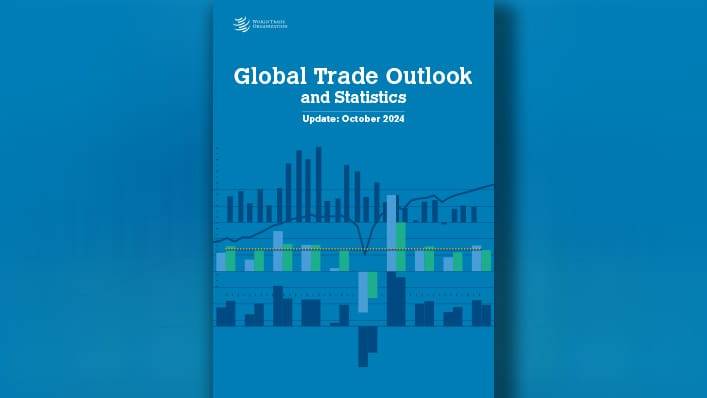
In the October 2024 update of the “Global Trade Outlook and Statistics,” WTO economists noted that global trade is projected to grow by 2.3% year-on-year in the first half of 2024, followed by moderate expansion for the remainder of the year and into 2025. This recovery follows a decline of 1.1% in 2023 due to high inflation and rising interest rates. The world’s real GDP growth is expected to remain stable at 2.7% in 2024 and 2025 when measured at market exchange rates.
By mid-2024, inflation had dropped significantly, allowing central banks to reduce interest rates. Lower inflation should boost real household income and consumer spending, while reduced interest rates are expected to encourage businesses to increase their investment spending.
The Director-General, Ngozi Okonjo-Iweala, stated, “We expect gradual improvements in global trade through 2024, but we remain cautious about possible setbacks, particularly concerning the potential escalation of regional conflicts like those in the Middle East. The impact on directly involved countries could be severe, but there could also be indirect effects on global energy costs and shipping routes. Beyond the economic implications, we are deeply concerned about the humanitarian outcomes for those affected by such conflicts.”
“It is essential that we continue to work together to ensure global economic stability and sustained growth, as these are fundamental to improving the welfare of people around the world. In the three decades since the WTO was established, per capita income in low- and middle-income economies has nearly tripled. We must persist in our efforts to promote inclusive global trade,” added DG Okonjo-Iweala.
The divergence in monetary policies among major economies could lead to financial instability and changes in capital flows as central banks cut interest rates. This may make loan repayments more challenging, especially for poorer economies. If cuts in advanced economies’ interest rates encourage unexpectedly strong growth without raising inflation, there could be limited growth in the forecasts.
Regional Trade Perspectives
“The latest forecasts for world trade in 2024 and 2025 show only minor revisions since the last global trade outlook report from April, but these estimates do not reflect some significant changes in the regional trade structure. Historical trade volume data has been substantially revised, including declines in European exports and imports up to 2020. There have also been notable revisions in GDP forecasts by region, including a 0.4 percentage point upgrade in North America’s growth, which could affect trade flows,” said WTO Chief Economist Ralph Ossa.
Europe is expected to see a 1.4% decline in export volumes in 2024, with imports dropping by 2.3%. Germany’s economy contracted by 0.3% in the second quarter, and manufacturing indicators reached a 12-month low in September. The automotive and chemicals sectors have negatively impacted European exports. The decline in EU automotive exports is worrying due to its potential impact on broad supply chains. Meanwhile, exports of organic chemicals, some related to pharmaceuticals, are returning to normal trends after a spike during the COVID-19 pandemic. The EU has also seen a decrease in machinery imports, particularly from China—a trend extending beyond geopolitical tensions, affecting imports from the U.S., South Korea, and Japan. However, increasing imports from India and Vietnam indicate their growing role in global supply chains.
Asia’s export volume is expected to grow the fastest among all regions, increasing by 7.4% in 2024. This growth is driven by major manufacturing economies like China, Singapore, and South Korea, which saw a strong export rebound in the first half of the year. Asian imports show varied trends: while growth in China has been modest, other economies like Singapore, Malaysia, India, and Vietnam are experiencing growth. This shift suggests the emerging role of these ‘connecting’ economies in trading with geopolitical blocks, potentially reducing fragmentation risks.
South America is recovering from the weaknesses experienced in both exports and imports in 2023, with a return expected in 2024. North American trade is largely driven by the United States, although Mexico stands out with strong import growth compared to the rest of the region. After a contraction in 2023, Mexican imports are rising again, highlighting the country’s growing role as a “connecting” economy in trade.
Africa’s export growth is aligned with global trends and has been revised downward from previous predictions due to an overall reconsideration of Africa’s trade data and unexpected weaknesses in imports from Africa’s key trading partner, Europe. In April, WTO economists predicted a contraction in CIS region imports, but now they expect a 1.1% increase due to stronger-than-expected GDP growth.
Trade exports from Least Developed Countries (LDCs) are projected to grow by 1.8% in 2024, slowing from the 4.6% increase recorded in 2023. Export growth is expected to pick up in 2025, reaching 3.7%. Meanwhile, LDC imports are projected to rise by 5.9% in 2024 and 5.6% in 2025, following a 4.8% decline in 2023. These forecasts are based on GDP growth estimates of 3.3% for 2023, 4.3% for 2024, and 4.7% for 2025.
Trade in Services
The short-term outlook for services is more positive compared to goods, with a year-on-year increase of 8% in the value of trade in commercial services in the first quarter of 2024. Broader services statistics for the second quarter will be released later in October, but data available up to June suggests that relatively strong growth is likely to continue into the second quarter.
The new export orders index for services rose to 51.7 in August, the highest level since July 2023. The services purchasing manager’s index remained solidly in the expansion zone at 52.9 in August, although it fell in September.
The full report is available here.
Detailed quarterly and annual trade statistics can be downloaded from the WTO Statistics Portal. Additionally, the interactive tool WTO | World Trade Statistics 2023 presents key data and trends in international trade, allowing users to filter data by economy, region, selected groups, product groups, and service sectors to view the latest trends in both value and volume.
Share
This revision simplifies the original content while maintaining key information and messages about global trade projections, regional trends, and the importance of cooperation for economic stability.