

Main Points In Hindi (मुख्य बातें – हिंदी में)
-
झाग की समस्या: अक्टूबर और नवंबर में दिल्ली में यमुना नदी में झाग बनने की समस्या बढ़ जाती है, जो मुख्य रूप से उच्च प्रदूषण स्तर और अनुपचारित सीवेज के कारण होती है। मानसून के बाद के महीनों में गर्म पानी की स्थिति और शुष्क मौसम इस समस्या को बढ़ाते हैं।
-
प्रदूषकों का योगदान: यमुना में प्रतिदिन 3.5 अरब लीटर से अधिक अनुपचारित सीवेज प्रवाहित होता है, जिसमें सर्फेक्टेंट और फॉस्फेट जैसे प्रदूषक शामिल होते हैं। ये रसायन पानी की सतह के तनाव को कम करते हैं, जिससे झाग बनता है।
-
जल और वायु प्रदूषण का संबंध: यमुना के झाग में मौजूद वाष्पशील कार्बनिक यौगिक (वीओसी) वायु प्रदूषण का एक संभावित स्रोत बन सकते हैं, जिससे दिल्ली में धुंध और स्मॉग की स्थिति और खराब होती है। ये यौगिक वायुमंडल में प्रतिक्रिया करके द्वितीयक प्रदूषक पैदा करते हैं।
-
पारिस्थितिकी और मानव स्वास्थ्य पर प्रभाव: झाग और प्रदूषण जल की गुणवत्ता को खराब करते हैं, जलीय जीवन को प्रभावित करते हैं और मानव स्वास्थ्य पर प्रतिकूल प्रभाव डालते हैं। झाग में मौजूद हानिकारक रसायन जलीय प्राणी की मृत्यु दर को बढ़ाते हैं और मानव उपयोग के लिए पानी को असुरक्षित बनाते हैं।
- समस्या के जटिल कारण: यमुना में झाग बनना न केवल मानवजनित कारकों का परिणाम है, बल्कि पर्यावरणीय परिस्थितियों का भी प्रभाव है। उच्च गर्मी, कम जल प्रवाह, और प्रदूषकों की उपस्थिति मिलकर झाग निर्माण की स्थिति को जन्म देते हैं।
Main Points In English(मुख्य बातें – अंग्रेज़ी में)
Here are the main points summarizing the text:
-
Dual Challenges of Pollution: During October and November, Delhi faces the double challenge of air and water pollution, significantly highlighted by the foam issue on the Yamuna River, which experiences foam formation due to high pollutant levels and untreated sewage.
-
Sources of Pollution: IIT Kanpur’s study indicates that the foam is primarily caused by untreated sewage and pollutants such as phosphates and surfactants from residential and industrial waste, which reduce water surface tension, leading to foam formation.
-
Environmental Factors: Seasonal changes contribute to the foam problem, as the reduction in water flow during dry months along with warmer temperatures post-monsoon creates ideal conditions for foam accumulation, aggravated by the entry of large volumes of untreated sewage.
-
Impact on Air Quality: The foam on the Yamuna poses not only a visual pollution problem but also contributes to air quality issues, as volatile organic compounds (VOCs) released from the foam can lead to secondary pollutants that impact human health and environmental conditions.
- Ecosystem and Health Risks: The presence of foam indicates deteriorating water quality, which risks aquatic life and human health. Contaminated water can lead to various health problems and disrupt the aquatic ecosystem, threatening species and food chains within that environment.

Complete News In Hindi(पूरी खबर – हिंदी में)
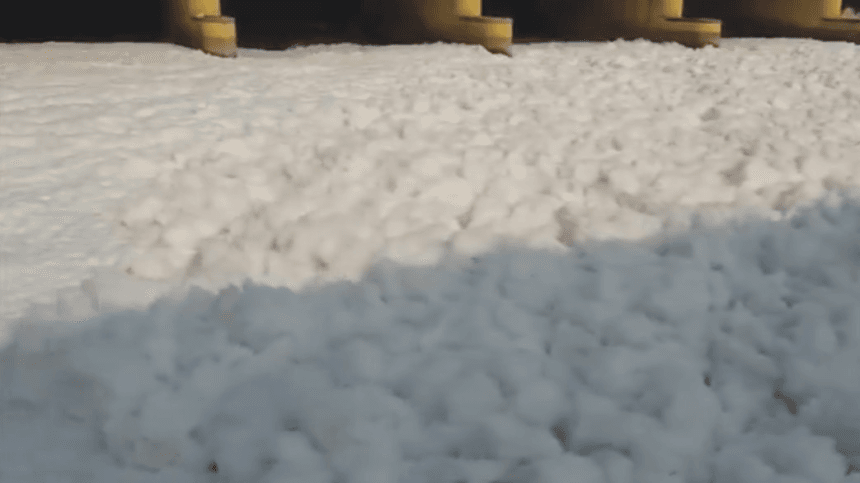
अक्टूबर और नवंबर के महीनों के दौरान, दिल्ली वायु और जल प्रदूषण की दोहरी चुनौती से जूझती है, जिसमें यमुना नदी का झाग एक प्रचलित मुद्दा बन जाता है। नदी, जो पहले से ही उच्च स्तर के प्रदूषण के बोझ से दबी हुई है, मानसून के बाद के महीनों और सर्दियों की शुरुआत के दौरान कुख्यात झाग की स्थिति का अनुभव करती है।
जबकि मानसून की बारिश अस्थायी रूप से प्रदूषकों को कम कर देती है, जल स्तर घटते ही मुख्य समस्याएं फिर से उभर आती हैं।
आईआईटी कानपुर द्वारा किए गए एक अध्ययन में इस मौसमी घटना के अंतर्निहित कारणों का पता लगाया गया। यमुना पर झाग मुख्य रूप से प्रदूषकों के उच्च स्तर और नदी में प्रवेश करने वाले अनुपचारित सीवेज के कारण होता है।
आवासीय और औद्योगिक कचरे से फॉस्फेट और सर्फेक्टेंट युक्त डिटर्जेंट महत्वपूर्ण योगदानकर्ता हैं। जब नदी में छोड़ा जाता है, तो ये रसायन पानी की सतह के तनाव को कम कर देते हैं, जिससे झाग बनने लगता है।
अनुपचारित सीवेज की बढ़ती मात्रा समस्या को और बढ़ा देती है।
पर्यावरणीय, मानवजनित कारक
नदियों में झाग बनना एक ऐसी घटना है जिसे अक्सर पर्यावरणीय और मानवजनित कारकों के मिश्रण के लिए जिम्मेदार ठहराया जाता है। यमुना के मामले में, विशेष रूप से अक्टूबर और नवंबर के दौरान ध्यान देने योग्य, परिस्थितियों के संगम के परिणामस्वरूप यह भद्दा दृश्य होता है।
झाग निर्माण में पर्यावरणीय कारक महत्वपूर्ण भूमिका निभाते हैं। मानसून के तुरंत बाद गर्म पानी का तापमान सर्फेक्टेंट की गतिविधि को बढ़ाता है – ऐसे यौगिक जो पानी की सतह के तनाव को कम करते हैं, फोम निर्माण को बढ़ावा देते हैं।
जैसे ही शुष्क मौसम आता है, जल प्रवाह दर कम हो जाती है। यह ठहराव झाग के संचय के लिए उत्तम परिस्थितियाँ प्रदान करता है, जैसा कि यमुना के विशिष्ट खंडों में देखा गया है।
विशेष रूप से, दिल्ली में यमुना नदी अनुपचारित सीवेज के निर्वहन के कारण गंभीर प्रदूषण से ग्रस्त है। नदी में प्रतिदिन 3.5 अरब लीटर से अधिक सीवेज प्रवाहित होता है, फिर भी केवल 35 से 40 प्रतिशत का ही उपचार किया जाता है। अनुपचारित कचरा प्रदूषण के स्तर में भारी योगदान देता है, जिसके परिणामस्वरूप उच्च प्रवाह के दौरान झाग बनता है।
मानसून के मौसम के बाद, झाग बनना तेज हो जाता है क्योंकि सर्दियों में ठंडा तापमान झाग को फैलाने के बजाय स्थिर कर देता है।
भारतीय प्रौद्योगिकी संस्थान, कानपुर में कोटक स्कूल ऑफ सस्टेनेबिलिटी के डीन प्रो. सच्चिदा नंद त्रिपाठी ने इस हैरान करने वाली घटना पर अंतर्दृष्टि प्रदान करते हुए कहा कि यमुना में झाग का निर्माण कई कारकों का परिणाम है, मुख्य रूप से अनुपचारित पानी का भारी प्रवाह मल.
त्रिपाठी ने इस बात पर भी प्रकाश डाला कि यमुना में प्रवेश करने वाला लगभग दो-तिहाई पानी अनुपचारित सीवेज है, यानी प्रति दिन लगभग 2 बिलियन लीटर अनुपचारित पानी। यह अपशिष्ट जल सर्फेक्टेंट, रासायनिक पदार्थों से भरा हुआ है जो आमतौर पर डिटर्जेंट और औद्योगिक निर्वहन में पाए जाते हैं।
सर्फ़ेक्टेंट्स में पानी की सतह के तनाव को कम करने का अनूठा गुण होता है, जो झाग बनने में मदद करता है। जब ऐसा अनुपचारित पानी तापमान और प्रवाह की गतिशीलता जैसी अनुकूल पर्यावरणीय परिस्थितियों को पूरा करता है, तो झाग का निर्माण तेज हो जाता है और लगातार बना रहता है।
एक अन्य योगदान कारक फिलामेंटस बैक्टीरिया की उपस्थिति है। ये जीव सर्फेक्टेंट अणु छोड़ते हैं, जो झाग को स्थिर करने में सहायता करते हैं। इसके अतिरिक्त, उत्तर प्रदेश में चीनी और कागज उद्योगों के प्रदूषक हिंडन नहर के माध्यम से यमुना में प्रवेश करते हैं, जिससे झाग की समस्या बढ़ जाती है।
झाग बनने के पीछे का विज्ञान
यमुना और अन्य जल निकायों जैसी नदियों में झाग बनना एक स्पष्ट लेकिन जटिल पर्यावरणीय मुद्दा है, जो अक्सर प्रदूषकों की उपस्थिति का संकेत देता है। झाग के पीछे प्रमुख दोषियों में से एक सर्फेक्टेंट है, पदार्थ जो आमतौर पर साबुन और डिटर्जेंट में पाए जाते हैं।
ये सर्फेक्टेंट मुख्य रूप से अनुपचारित सीवेज के माध्यम से जल प्रणालियों में प्रवेश करते हैं और पानी की सतह के तनाव को कम करते हैं, जिससे बुलबुले बनने और बने रहने में आसानी होती है। जैसे-जैसे नदियाँ चलती और बहती हैं, ये बुलबुले झाग के बड़े टुकड़ों में एकत्रित हो जाते हैं।
सर्फेक्टेंट के अलावा, नदियाँ महत्वपूर्ण मात्रा में कार्बनिक पदार्थ भी अवशोषित करती हैं। इसमें सड़ने वाली वनस्पति सामग्री, मृत जीव और कृषि अपशिष्ट शामिल हैं। जैसे ही ये कार्बनिक पदार्थ टूटते हैं, वे गैस छोड़ते हैं। सर्फैक्टेंट युक्त पानी में, ये गैसें फंस जाती हैं, जिससे झाग बनने में योगदान होता है। ऐसे कार्बनिक पदार्थों का संचय अक्सर कृषि अपवाह और खराब अपशिष्ट प्रबंधन प्रथाओं का परिणाम होता है।
इसके अतिरिक्त, कई प्रदूषित जलमार्ग हाइपोक्सिया से पीड़ित हैं – कम घुलित ऑक्सीजन स्तर की स्थिति – नाइट्रेट और फॉस्फेट से पोषक तत्व प्रदूषण से बढ़ जाती है। यह स्थिति यूट्रोफिकेशन की ओर ले जाती है, जहां अत्यधिक पोषक तत्व शैवाल के खिलने को उत्तेजित करते हैं।
जैसे ही ये फूल मरते हैं और विघटित होते हैं, वे मीथेन और कार्बन डाइऑक्साइड जैसी गैसें छोड़ते हैं। जब सर्फेक्टेंट के साथ मिलाया जाता है, तो ये गैसें बुलबुले के निर्माण में वृद्धि करती हैं, जिसके परिणामस्वरूप झाग बनता है।
झाग और वायु प्रदूषण
पानी में वाष्पशील कार्बनिक प्रदूषक, जैसे कि फ़ेथलेट्स, हाइड्रोकार्बन और कीटनाशक, वायुमंडल में वाष्पित हो सकते हैं, विशेष रूप से इन प्रदूषकों के उच्च स्तर वाले क्षेत्रों में, जैसे कि यमुना नदी। ये प्रदूषक पानी और हवा के बीच विभाजित हो सकते हैं, वायुमंडलीय ऑक्सीडेंट के साथ प्रतिक्रियाओं के माध्यम से द्वितीयक कार्बनिक एरोसोल (एसओए) बनाते हैं।
यह प्रक्रिया तापमान, आर्द्रता और पानी की जैविक संरचना सहित पर्यावरणीय परिस्थितियों से प्रभावित होती है। अनुसंधान इंगित करता है कि ऐसे प्रदूषित वातावरण में पानी और कार्बनिक प्रजातियों की उपस्थिति हवा में वाष्पशील कार्बनिक यौगिकों की आवाजाही को सुविधाजनक बना सकती है, जिससे वायु गुणवत्ता के लिए अतिरिक्त चिंताएं पैदा हो सकती हैं।
भारतीय प्रौद्योगिकी संस्थान (आईआईटी) कानपुर के प्रोफेसर सच्चिदानंद त्रिपाठी ने दिल्ली की निरंतर वायु प्रदूषण समस्या के लिए कम ज्ञात लेकिन महत्वपूर्ण योगदानकर्ता पर प्रकाश डाला: यमुना नदी का झाग। प्रो.त्रिपाठी के अनुसार, यमुना पर बनने वाला झाग न केवल प्रदूषण का एक दृश्य संकेत है, बल्कि वायुजनित प्रदूषकों का एक संभावित खतरनाक स्रोत है।
प्रोफेसर त्रिपाठी ने बताया, “यमुना के झाग का स्थिर बुलबुला काफी हद तक कार्बनिक प्रजातियों से बना है जो वाष्पशील कार्बनिक यौगिक (वीओसी) छोड़ते हैं।”
ये वीओसी शहरी वातावरण में वायु प्रदूषण में महत्वपूर्ण योगदानकर्ता हैं, क्योंकि वे वायुमंडल में प्रतिक्रिया करके ओजोन और पार्टिकुलेट मैटर सहित द्वितीयक प्रदूषक बना सकते हैं, जो मानव स्वास्थ्य के लिए हानिकारक हैं।
इसके अलावा, प्रो.त्रिपाठी ने जल-वायु इंटरफेस पर होने वाली जटिल बातचीत पर प्रकाश डाला। उन्होंने कहा, “पानी और हवा के बीच जटिल कार्बनिक पदार्थों का विभाजन भी हो रहा है।”
इस प्रक्रिया का तात्पर्य यह है कि झाग में मौजूद कई कार्बनिक यौगिक हवा में स्थानांतरित हो जाते हैं, जिससे प्रदूषकों का मिश्रण समृद्ध हो जाता है जिससे धुंध का निर्माण होता है।
हवा में छोड़ी गई ये वाष्पशील कार्बनिक गैसें और अन्य यौगिक एयरोसोल निर्माण के अग्रदूत के रूप में कार्य करते हैं, जो स्मॉग का एक महत्वपूर्ण घटक है और दिल्ली में छाई धुंध के प्राथमिक दोषियों में से एक है।
झाग प्रभावित करने वाला पारिस्थितिकी तंत्र
जल निकायों में झाग, विशेष रूप से यमुना जैसी नदियों में, पानी की गुणवत्ता, जलीय जीवन और समग्र पारिस्थितिकी तंत्र के स्वास्थ्य के लिए एक महत्वपूर्ण खतरा पैदा करता है। यह घटना मुख्य रूप से प्रदूषण के कारण होती है, जिसके परिणामस्वरूप झाग दिखाई देता है जिसमें बड़ी मात्रा में हानिकारक रसायन और जैविक अपशिष्ट होते हैं।
प्राथमिक चिंताओं में से एक पानी की गुणवत्ता में गिरावट है। झाग उच्च प्रदूषण स्तर का एक स्पष्ट संकेत है, जो अनुपचारित सीवेज और औद्योगिक गतिविधियों से सर्फेक्टेंट, फॉस्फेट और जैविक कचरे के कारण होता है। ये प्रदूषक पानी को मानव उपभोग और मनोरंजक उपयोग के लिए असुरक्षित बनाते हैं।
इसके अलावा, अत्यधिक कार्बनिक प्रदूषकों की उपस्थिति से यूट्रोफिकेशन होता है, जिससे शैवाल खिलता है। जब ये शैवाल विघटित होने लगते हैं, तो वे पानी में ऑक्सीजन का उपयोग करते हैं, जिससे हाइपोक्सिया होता है, जो पानी की गुणवत्ता को और कम कर देता है।
जलीय जीवन पर प्रभाव गंभीर है। झाग में मौजूद सर्फेक्टेंट और जहरीले रसायन जलीय जीवों, विशेषकर मछलियों की सेलुलर झिल्लियों को बाधित करते हैं, जिससे मृत्यु दर और प्रजनन संबंधी चुनौतियाँ पैदा होती हैं।
इसके अतिरिक्त, पानी में ऑक्सीजन की कमी के परिणामस्वरूप मछली और अन्य एरोबिक जीवों का दम घुट सकता है। पोषक तत्वों की अधिकता से उत्पन्न शैवाल के फूल भी विषाक्त पदार्थ पैदा करते हैं, जलीय जीवन को खतरे में डालते हैं और पानी को मानव उपयोग के लिए असुरक्षित बनाते हैं।
पारिस्थितिक दृष्टिकोण से, झाग पूरे पारिस्थितिक तंत्र को बाधित करता है। मछलियों और विभिन्न जलीय प्रजातियों की मृत्यु खाद्य श्रृंखला को बाधित करती है, शिकारियों को प्रभावित करती है और असंतुलन पैदा करती है। झाग और शैवाल द्वारा जलीय पौधों को गलाने से जीवित रहने के लिए इन पौधों पर निर्भर रहने वाली प्रजातियों का निवास स्थान नष्ट हो जाता है।
मानव स्वास्थ्य भी खतरे में है। झाग वाले प्रदूषित जल में भारी धातुएँ और कीटनाशक जैसे हानिकारक पदार्थ मौजूद होते हैं। ऐसे पानी के संपर्क में आने से त्वचा में जलन, गैस्ट्रोइंटेस्टाइनल समस्याएं और कैंसर सहित दीर्घकालिक स्वास्थ्य संबंधी चिंताएं हो सकती हैं।
Complete News In English(पूरी खबर – अंग्रेज़ी में)
Understanding the Foam Problem in the Yamuna River
During October and November, Delhi faces the dual challenge of air and water pollution, with the foam in the Yamuna River becoming a significant issue. The river, already burdened by high pollution levels, experiences this notorious foaming condition after the monsoon and as winter begins.
While the monsoon rains temporarily reduce pollution, problems resurface as water levels drop. A study by IIT Kanpur identifies the underlying causes of this seasonal phenomenon. The foam in the Yamuna is primarily due to high levels of pollutants and untreated sewage entering the river.
Residential and industrial waste contains phosphates and surfactants from detergents, contributing significantly to the problem. When these chemicals enter the river, they lower the surface tension of the water, leading to foam formation. The increasing volume of untreated sewage exacerbates the situation.
Environmental and Human Factors
Foaming in rivers is often attributed to both environmental and human-induced factors. In the case of the Yamuna, especially noticeable in October and November, a combination of conditions results in this ugly sight. Environmental factors play a crucial role in foam formation. The warm water temperature just after the monsoon enhances the activity of surfactants—compounds that reduce water’s surface tension and promote bubble formation.
As dry weather sets in, the flow rate of water decreases. This stagnation creates ideal conditions for foam accumulation, as observed in certain sections of the Yamuna. In Delhi, the Yamuna is heavily polluted due to untreated sewage discharge. Over 3.5 billion liters of sewage flow into the river every day, yet only about 35 to 40 percent is treated. The untreated waste significantly contributes to pollution levels, leading to foam formation during high flow periods.
After the monsoon, foaming intensifies because the colder winter temperatures stabilize the foam instead of dispersing it. Professor Sachchidanand Tripathi from the Kotak School of Sustainability at IIT Kanpur provides insights into this alarming phenomenon, stating that the foam formation in the Yamuna results from multiple factors, primarily the heavy influx of untreated sewage.
Tripathi highlights that nearly two-thirds of the water entering the Yamuna is untreated sewage—approximately 2 billion liters daily. This wastewater is filled with surfactants and chemicals typically found in detergents and industrial discharge. Surfactants lower the water’s surface tension, aiding in foam formation. When untreated water meets favorable environmental conditions like temperature and flow dynamics, foam formation accelerates and persists.
Another contributing factor is the presence of filamentous bacteria. These organisms release surfactant molecules that help stabilize the foam. Additionally, pollutants from the sugar and paper industries in Uttar Pradesh enter the Yamuna through the Hindon Canal, worsening the foaming problem.
The Science Behind Foam Formation
Foaming in rivers like the Yamuna is a clear yet complex environmental issue, often indicating the presence of pollutants. Surfacing surfactants, commonly found in soaps and detergents, are one of the primary culprits. These surfactants typically enter aquatic systems through untreated sewage, reducing water surface tension and facilitating bubble formation.
As rivers flow, these bubbles collect into larger foam masses. Besides surfactants, rivers absorb significant organic material, including decayed plant matter, dead organisms, and agricultural waste. As these organic materials decompose, they release gases, which become trapped in surfactant-laden water, contributing to foam formation. The accumulation of such organic materials often results from agricultural runoff and poor waste management practices.
Additionally, many polluted waterways suffer from hypoxia—low levels of dissolved oxygen—exacerbated by nutrient pollution from nitrates and phosphates. This condition leads to eutrophication, stimulating excessive algae blooms. As these blooms die and decompose, they release gases like methane and carbon dioxide. When combined with surfactants, these gases enhance bubble formation, resulting in foam.
Foam and Air Pollution
Volatile organic pollutants in the water, such as phthalates, hydrocarbons, and pesticides, can evaporate into the atmosphere, especially in areas with high pollutant levels like the Yamuna River. These pollutants can partition between water and air, creating secondary organic aerosols (SOAs) through reactions with atmospheric oxidants.
This process is influenced by environmental conditions, including temperature, humidity, and the biological composition of the water. Research indicates that the presence of water and organic species in such polluted environments can facilitate the movement of volatile organic compounds into the air, raising further concerns for air quality.
Professor Sachchidanand Tripathi from IIT Kanpur highlights an often-overlooked contributor to Delhi’s persistent air pollution problem: the foam from the Yamuna River. According to him, the foam not only visibly represents pollution but may also be a hazardous source of airborne pollutants.
Tripathi explains that the stable bubbles formed in the Yamuna are largely made up of organic species that release volatile organic compounds (VOCs). These VOCs are significant contributors to urban air pollution, as they can react in the atmosphere to produce secondary pollutants like ozone and particulate matter that are harmful to human health.
Furthermore, Tripathi emphasizes the complex interactions occurring at the water-air interface. He states, "There is also a complex partitioning of organic compounds between water and air." This implies that many organic compounds present in the foam can transfer into the air, enriching the mix of pollutants that contribute to smog formation.
Impact of Foam on Ecosystems
Foam in water bodies, particularly in rivers like the Yamuna, poses a significant threat to water quality, aquatic life, and the overall health of the ecosystem. This phenomenon primarily occurs due to pollution, resulting in foam that contains large quantities of harmful chemicals and biological waste.
One of the primary concerns is the deterioration of water quality. Foam serves as a clear indicator of high pollution levels caused by surfactants, phosphates, and organic waste from untreated sewage and industrial activities. These pollutants render the water unsafe for human consumption and recreational use.
Moreover, the presence of excessive organic pollutants leads to eutrophication, triggering algal blooms. As these blooms start to decompose, they consume oxygen in the water, leading to hypoxia, which further reduces water quality.
The impact on aquatic life is severe. The surfactants and toxic chemicals in foam disrupt the cellular membranes of aquatic organisms, especially fish, leading to increased mortality rates and reproductive challenges. Additionally, a lack of oxygen in the water can suffocate fish and other aerobic organisms. The algae blooms fueled by nutrient excess can also produce toxins that endanger aquatic life and make the water unsafe for human use.
From an ecological perspective, foam disrupts the entire ecosystem. The deaths of fish and other aquatic species interfere with the food chain, affecting predators and creating imbalances. The degradation of aquatic plants by foam and algae destroys habitats for species that rely on these plants for survival.
Human health is also at risk. Polluted water with foam contains harmful substances like heavy metals and pesticides. Contact with this water can cause skin irritations, gastrointestinal issues, and long-term health concerns, including cancer.
Published By: Akhilesh Nagri
Published On: October 20, 2024