

Main Points In Hindi (मुख्य बातें – हिंदी में)
-
भारत से चावल का निर्यात: भारत ने एक महीने पहले चावल निर्यात पर लगे प्रतिबंध और संबंधित करों को हटा दिया, लेकिन नेपाल में चावल की कीमतें अभी भी घटने में असमर्थ हैं। नेपाल में अधिकतर लोग उच्च गुणवत्ता वाले चावल का सेवन करते हैं, जो भारत से आयात किया जाता है।
-
नेपाल में चावल के आयात की स्थिति: नेपाल ने जुलाई 2023 में भारत से 22 अरब रुपये के चावल और धान का आयात किया है। पिछले वित्तीय वर्ष में, भारत से 47.35 अरब रुपये का चावल आयात हुआ था। चावल की कीमतें निर्यात प्रतिबंध के तुरंत बाद बढ़ गई थीं।
-
तस्करी का प्रभाव: नेपाल में चावल की तस्करी एक गंभीर समस्या बन गई है, जहां अनुमानित 8,000 बैग चावल प्रतिदिन तस्करी के माध्यम से नेपाल में प्रवेश कर रहे हैं। तस्करी की वजह से सरकारी करों और स्थानीय चावल मिलों की आय में कमी आई है।
-
नई फसल और कीमतें: कृषकों का मानना है कि नई धान की फसल के चलते, जो अक्टूबर-नवंबर में कटेगी, चावल की कीमतों में कमी आ सकती है। हालांकि, भारत ने नई दरें तय नहीं की हैं, जो नेपाल में चावल की कीमतों को प्रभावित करेंगी।
- जलवायु परिवर्तन के प्रभाव: नेपाल में मानसून के कारण बाढ़ और भूस्खलन से धान उत्पादन प्रभावित होने की संभावना है, जिससे खाद्य सुरक्षा और किसानों की आजीविका को खतरा हो सकता है।
Main Points In English(मुख्य बातें – अंग्रेज़ी में)
Here are the main points from the provided text:
-
Export Restrictions and Market Prices: Despite India’s removal of restrictions on rice exports and the elimination of export duties over a month ago, there has been no significant drop in domestic rice prices in Nepal. Traders believe prices could decrease as the rice harvest season progresses.
-
Import Dynamics and Price Increases: Following India’s export restrictions, rice prices in Nepal surged significantly, rising to between 200 to 250 NPR per 25 kg bag. However, as Indian rice production is expected to be high, prices may decrease after the harvest.
-
Smuggling Issues: Since the export bans, rice smuggling from India to Nepal has escalated. Research indicates that only 40% of the rice imported from India comes through official channels, highlighting the impact of smuggling on local markets and government revenues.
-
Impact of Climate and Crop Production: The climatic conditions, including heavy rainfall and floods affecting a large amount of agricultural land, may impact this year’s rice production in Nepal, raising concerns about food security.
- Market Behavior of Traders: Local traders are beginning to import rice again following the lifting of bans, but prices remain under pressure due to previous stock and ongoing market conditions. The current pricing reflects historical costs impacted by various tariffs and are expected to change as new stocks enter the market.

Complete News In Hindi(पूरी खबर – हिंदी में)
भारत द्वारा एक महीने से अधिक समय पहले चावल निर्यात प्रतिबंध हटाने और निर्यात शुल्क हटाने के बावजूद, घरेलू बाजार में कीमतों में कमी आने से इनकार कर दिया गया है।
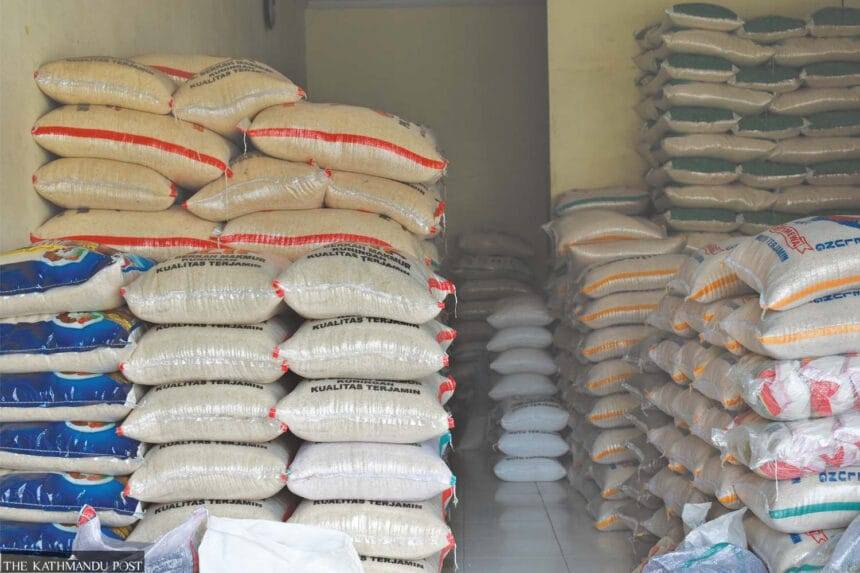
नेपाल के अधिकांश शहरी निवासी भारत से आयातित और नेपाल में पैक किए गए बढ़िया और लंबे दाने वाले चावल खाते हैं, क्योंकि देश इन महंगी किस्मों का बहुत कम उत्पादन करता है।
हालाँकि, नेपाली व्यापारियों का कहना है कि धान की फसल शुरू होने के कारण कुछ हफ्तों में कीमतें कम हो सकती हैं। जुलाई के मध्य में समाप्त हुए पिछले वित्तीय वर्ष में नेपाल ने 22 अरब रुपये मूल्य के चावल और धान का आयात किया, हालांकि भारत ने घरेलू आपूर्ति सुनिश्चित करने और कीमतों को नियंत्रण में रखने के लिए जुलाई 2023 में गैर-बासमती चावल के निर्यात पर प्रतिबंध लगा दिया था।
2021-22 में भारत से चावल और धान का आयात 47.35 अरब रुपये का था। इससे पहले, 2020-21 में आयात पर 50.48 अरब रुपये का बिल आया था।
भारत द्वारा प्रतिबंध लगाए जाने के तुरंत बाद, नेपाल में चावल की कीमत 200 रुपये से 250 रुपये प्रति 25 किलोग्राम बैग तक बढ़ गई।
बंपर फसल के अनुमान के बाद 27 सितंबर को प्रतिबंध हटा लिया गया, लेकिन न्यूनतम निर्यात मूल्य लागू कर दिया गया। नई दिल्ली ने गैर-बासमती सफेद चावल निर्यात के लिए न्यूनतम निर्यात मूल्य 490 डॉलर प्रति टन निर्धारित किया है।
हालाँकि, भारत सरकार ने उबले चावल के निर्यात पर शुल्क 20 प्रतिशत से घटाकर 10 प्रतिशत कर दिया।
23 अक्टूबर को विदेश व्यापार महानिदेशालय द्वारा जारी एक अधिसूचना के अनुसार, भारत ने सभी प्रकार के करों को हटाते हुए न्यूनतम निर्यात मूल्य और शुल्क को समाप्त कर दिया।
कृष्णभोग चावल के उत्पादक राधा कृष्ण राइस मिल के कार्यकारी निदेशक विभोर अग्रवाल ने कहा, “जैसा कि भारत ने चावल की बंपर पैदावार का अनुमान लगाया है, उसने चावल निर्यात प्रतिबंध और सभी कर हटा दिए हैं।”
उन्होंने कहा, “नई फसल बाजार में पहुंचने के बाद चावल की कीमत कम हो जाएगी।” धान की रोपाई जून-जुलाई में की जाती है और कटाई अक्टूबर-नवंबर में की जाती है।
भारत ने अभी तक धान की नई दर तय नहीं की है। अग्रवाल ने कहा, ”नई दर नेपाल में कीमत तय करेगी।”
हालांकि, व्यापारियों का कहना है कि जीरा मासिनो चावल की कीमत, प्रति 25 किलोग्राम बैग 2,500 रुपये, घटकर 2,400 रुपये हो गई है, जो कि मात्र 100 रुपये की गिरावट है।
प्रतिबंध से पहले, जीरा मासिनो चावल की कीमत 1,600 रुपये प्रति 25 किलोग्राम थी।
घरेलू चावल व्यापारियों ने कहा कि प्रतिबंध हटने के बाद उन्होंने चावल का आयात शुरू कर दिया है।
अग्रवाल ने कहा कि घरेलू व्यापारियों ने काठमांडू में सामान्य चावल का 25 किलोग्राम का बैग 2,100 रुपये से 2,150 रुपये में बेचना शुरू कर दिया है।
सोना मंसुली को छोड़कर, घरेलू उत्पादकों द्वारा प्रीमियम जीरा मासिनो के तहत कतरनी चावल की कीमत अभी तक तय नहीं की गई है। अग्रवाल ने कहा, ”इसलिए जीरा मासिनो चावल मौजूदा दर पर बेचा जा रहा है।”
अग्रवाल ने कहा, “चूंकि हमारे पास पुराना स्टॉक बचा हुआ है, जिसे हमने भारत को 20 प्रतिशत निर्यात शुल्क और नेपाली सीमा शुल्क को 7 प्रतिशत शुल्क का भुगतान करके आयात किया है, हम मौजूदा दर पर बेच रहे हैं।”
अग्रवाल ने कहा, चूंकि भारत ने 20 प्रतिशत निर्यात शुल्क हटा दिया है, इसलिए कीमत 300 रुपये प्रति बैग कम हो जाएगी। 20 प्रतिशत निर्यात शुल्क की लागत 500 से 600 रुपये प्रति बैग है।
नेपाल में, दक्षिणी पड़ोसी द्वारा मुख्य अनाज के निर्यात पर प्रतिबंध लगाने के बाद से भारत से नेपाल चावल की तस्करी खतरनाक स्तर तक बढ़ गई है।
अंतर्राष्ट्रीय खाद्य नीति अनुसंधान संस्थान के साथ साझेदारी में साउथ एशिया वॉच ऑन ट्रेड, इकोनॉमिक्स एंड एनवायरनमेंट (SAWTEE) द्वारा तैयार किए गए शोध, ‘नेपाल और भारत के बीच कृषि उत्पादों में अनौपचारिक सीमा पार व्यापार की गतिशीलता’ से पता चला कि केवल 40 प्रतिशत औपचारिक माध्यम से भारत से नेपाल में चावल का आयात किया जाता है।
घरेलू चावल उत्पादकों ने कहा कि अनुमान है कि विभिन्न नेपाल-भारत सीमा बिंदुओं से प्रतिदिन लगभग 8,000 बैग चावल (25-30 किलोग्राम आकार) की नेपाल में तस्करी की जा रही है।
रिपोर्ट्स के मुताबिक, तस्कर साइकिल पर चावल की सप्लाई करते हैं और एक तस्कर ऐसा दिन में 10 बार तक करता है। कर चुकाकर आयातित चावल की तुलना में तस्करी का चावल सस्ता है।
तस्करी ने नेपाल में सरकारी करों और चावल मिलों की आय को प्रभावित किया है।
“त्योहार के कारण हमने धान का नया स्टॉक आयात नहीं किया है। नया स्टॉक बिना शुल्क और कर के आएगा, ”अग्रवाल ने कहा।
भारत दुनिया का सबसे बड़ा चावल निर्यातक है, जिसकी हिस्सेदारी 40 प्रतिशत से अधिक है।
अल नीनो घटना के बावजूद, नेपाली किसानों ने पिछले वित्तीय वर्ष में 5.72 मिलियन टन धान की कटाई की।
कृषि मंत्रालय के अधिकारियों के अनुसार, सितंबर के अंत में भारी बारिश के कारण नेपाल के अधिकांश हिस्सों में बाढ़ और भूस्खलन के कारण इस साल धान का उत्पादन थोड़ा प्रभावित हो सकता है।
गुरुवार को गृह मंत्रालय के तहत राष्ट्रीय आपदा जोखिम न्यूनीकरण और प्रबंधन प्राधिकरण द्वारा जारी प्रारंभिक हानि और क्षति मूल्यांकन रिपोर्ट के अनुसार, 26 से 28 सितंबर तक बाढ़ और भूस्खलन से 65,380 हेक्टेयर कृषि भूमि और 26,698 पशुधन प्रभावित हुए, जिसके परिणामस्वरूप अनुमानित आर्थिक क्षति हुई। 5.88 अरब रुपये का नुकसान।
रिपोर्ट में कहा गया है कि कृषि पर महत्वपूर्ण प्रभाव से खाद्य सुरक्षा और किसानों की आजीविका को खतरा है, जो आय के लिए अपनी भूमि और पशुधन पर बहुत अधिक निर्भर हैं।
Complete News In English(पूरी खबर – अंग्रेज़ी में)
Sure! Here’s a simplified version of the content:
Despite India removing its restrictions on rice exports and dropping export duties over a month ago, rice prices in the domestic market have not decreased. Most urban residents in Nepal consume fine and long-grain rice imported from India, as the country produces very little of these expensive varieties.
Nepali traders believe that prices might drop in a few weeks due to the upcoming rice harvest. In the last financial year, which ended in mid-July, Nepal imported rice and paddy worth 22 billion rupees. However, in July 2023, India imposed a ban on the export of non-basmati rice to ensure local supply and control prices.
During the 2021-22 fiscal year, Nepal imported rice and paddy worth 47.35 billion rupees, while in 2020-21, the bill was 50.48 billion rupees. Right after India imposed the ban, rice prices in Nepal rose to 200 to 250 rupees for a 25 kg bag.
On September 27, after expectations of a bumper harvest, India lifted the ban but introduced a minimum export price of $490 per ton for non-basmati white rice. Additionally, the Indian government reduced the export duty on boiled rice from 20% to 10%.
On October 23, the Directorate General of Foreign Trade (DGFT) in India removed all taxes, including the minimum export price and the duty. Vibhor Agarwal, Executive Director of Radha Krishna Rice Mill, mentioned that with the anticipated bumper crop, India lifted the ban and all taxes.
He indicated that prices may fall once the new crop hits the market. The planting of rice occurs between June and July, while harvesting happens in October and November. However, India hasn’t yet set a new price for paddy. Agarwal noted that this new price would influence what people pay in Nepal.
Trade reports show that prices for Jeera Masino rice have slightly decreased, from 2,500 rupees for a 25 kg bag to 2,400 rupees, a drop of just 100 rupees. Before the ban, this rice cost around 1,600 rupees per 25 kg.
Local traders have started importing rice again after the ban was lifted. Agarwal shared that in Kathmandu, normal rice bags of 25 kg are being sold for 2,100 to 2,150 rupees. However, prices for premium Jeera Masino rice are still to be determined. Agarwal mentioned that they are selling existing stocks purchased at higher import taxes.
Since India reduced the 20% export duty, the cost per bag might drop by up to 300 rupees. This previous export duty was about 500 to 600 rupees per bag.
There has been a rise in rice smuggling from India to Nepal since India’s export restrictions were imposed. Research shows that only around 40% of rice imported from India to Nepal is done through formal channels. It’s estimated that about 8,000 bags of rice are smuggled into Nepal daily.
Smugglers often deliver rice via bicycles, making multiple trips per day. Smuggled rice is cheaper than imported rice, affecting government tax revenues and the income of local rice mills.
Agarwal noted that due to the festivals, they have not imported new stocks of rice as they expect to bring in the new stock without tariffs. India remains the world’s largest rice exporter, holding over a 40% share in global rice exports.
Although the El Niño weather phenomenon occurred, Nepali farmers harvested 5.72 million tons of rice last fiscal year. However, officials from the Ministry of Agriculture warned that heavy rains at the end of September could slightly impact this year’s rice production due to floods and landslides.
A preliminary report by the National Disaster Risk Reduction and Management Authority indicated that between September 26 and 28, floods and landslides affected 65,380 hectares of agricultural land and 26,698 livestock, leading to an estimated economic loss of 5.88 billion rupees. The report highlighted that the significant impact on agriculture poses a threat to food security and the livelihoods of farmers who rely heavily on their land and livestock for income.
Source link