

Main Points In Hindi (मुख्य बातें – हिंदी में)
-
जलवायु परिवर्तन का प्रभाव: मानव गतिविधियों के कारण वायुमंडलीय CO2 का स्तर बढ़ रहा है, जिससे वैश्विक तापमान में वृद्धि हो रही है, जो फसल विकास को खतरे में डाल रहा है। भारत के बनारस हिंदू विश्वविद्यालय के शोधकर्ताओं ने इस प्रभाव को समझने के लिए अध्ययन किया है।
-
गणितीय मॉडल का विकास: शोधकर्ताओं ने CO2, तापमान, मानव आबादी और फसल वृद्धि के बीच गैर-रेखीय संबंधों को पकड़ने के लिए एक गणितीय मॉडल विकसित किया, जिससे मौसमी विविधताओं और फसल उपज पर तापमान के प्रभाव की बेहतर समझ प्राप्त की जा सके।
-
फसल की पैदावार में गिरावट: अध्ययन में पाया गया कि बढ़ता CO2 स्तर और उच्च तापमान फसल की पैदावार को नकारात्मक रूप से प्रभावित कर सकते हैं, विशेष रूप से जब तापमान एक महत्वपूर्ण सीमा से ऊपर चला जाता है। विभिन्न फसल किस्में इस पर अलग-अलग प्रतिक्रियाएं दिखा सकती हैं।
-
अनुकूलन रणनीतियाँ: शोध में सुझाव दिया गया है कि उच्च तापमान सहिष्णुता वाली फसल किस्मों के विकास के माध्यम से जलवायु परिवर्तन के प्रभावों को कम किया जा सकता है। यह कृषि उत्पादकता को बनाए रखने के लिए एक संभावित रणनीति के रूप में उभरा है।
- भविष्य की दिशा: शोधकर्ताओं ने अपने मॉडल में अधिक कारकों जैसे कीटों की आबादी, पानी की उपलब्धता और मिट्टी की गुणवत्ता को शामिल करने की योजना बनाई है, ताकि जलवायु परिवर्तन के तहत फसल की उपज को और बेहतर ढंग से समझा जा सके।
Main Points In English(मुख्य बातें – अंग्रेज़ी में)
Here are the main points from the provided text:
-
Impact of Human Activities: Anthropogenic activities are increasing atmospheric carbon dioxide (CO2) levels, contributing to rising global average surface temperatures and posing threats to crop development and global food security.
-
Research Insights: Researchers from Banaras Hindu University have developed a mathematical model to understand the non-linear relationships between CO2, temperature, human population, and crop yield, revealing the complexities of climate and crop interactions.
-
Threshold Effects: The study identifies a critical threshold for CO2 emissions, beyond which crop yields significantly decline due to heat stress, emphasizing that different crop varieties respond differently to these changes.
-
Need for Adaptive Strategies: The research highlights the importance of developing climate-resilient crops with higher temperature tolerance as a strategy to mitigate the effects of climate change on agricultural productivity, which is essential for food security.
- Future Research Directions: The team plans to refine their model by incorporating additional factors such as insect populations, water availability, soil quality, and nutrient levels to further understand their impact on crop yields under climate change conditions.

Complete News In Hindi(पूरी खबर – हिंदी में)
न्यूज़वाइज – वाशिंगटन, 26 नवंबर, 2024 – मानवीय गतिविधियों के कारण वायुमंडलीय कार्बन डाइऑक्साइड (सीओ2) का स्तर बढ़ रहा है, जिससे वैश्विक औसत सतह का तापमान बढ़ जाता है – और फसल के विकास के लिए खतरा पैदा हो जाता है। वैश्विक खाद्य सुरक्षा पर जलवायु परिवर्तन के प्रभाव के बारे में बढ़ती चिंताओं ने भारत में बनारस हिंदू विश्वविद्यालय के शोधकर्ताओं को यह पता लगाने के लिए प्रेरित किया कि ये कारक फसल की पैदावार को कैसे प्रभावित करते हैं।
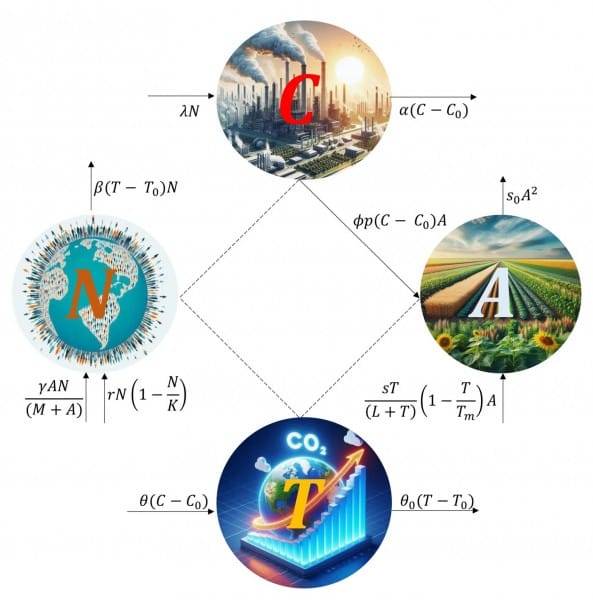
कैओस में, एआईपी पब्लिशिंग से, शोधकर्ता CO2, तापमान, मानव आबादी और फसल वृद्धि के बीच गैर-रेखीय संबंधों को पकड़ने के लिए बनाया गया एक गणितीय मॉडल साझा करते हैं। पारिस्थितिक प्रणालियों के भीतर अराजक और जटिल गतिशीलता के बढ़ते साक्ष्य ने उन्हें मौसमी विविधताओं और तापमान-सहिष्णु फसलों को विकसित करने जैसी संभावित शमन रणनीतियों की गहरी समझ हासिल करने के लिए स्वायत्त और गैर-स्वायत्त दोनों मॉडलों का उपयोग करने के लिए प्रेरित किया।
टीम का अध्ययन वायुमंडलीय CO2 की गतिशीलता, बढ़ते तापमान, मानव आबादी और फसल की उपज की प्रमुख अवधारणाओं को एकीकृत करता है।
एके मिश्रा ने कहा, “हमने विचार किया है कि सीओ2 का बढ़ता स्तर शुरू में ‘सीओ2 निषेचन प्रभाव’ के माध्यम से फसल की वृद्धि को कैसे बढ़ावा देगा, लेकिन एक बार तापमान एक महत्वपूर्ण सीमा से अधिक हो जाने पर गर्मी का तनाव पैदावार कम कर देगा।” “मौसमी बदलावों के साथ एक गैर-स्वायत्त प्रणाली आवधिक उतार-चढ़ाव और अराजकता जैसे जटिल व्यवहारों को प्रकट करती है – और बढ़ते तापमान के प्रति फसल प्रतिक्रियाओं की अप्रत्याशितता को उजागर करती है।”
टीम द्वारा विचार की गई अवधारणाएं जलवायु और फसल की परस्पर क्रिया की जटिलता को समझने के लिए केंद्रीय हैं जो अप्रत्याशित चरम परिणामों को जन्म दे सकती हैं। उनका काम कृषि उत्पादकता को बनाए रखने के लिए इन चरों को प्रभावी ढंग से प्रबंधित करने के महत्व को दर्शाता है।
मिश्रा ने कहा, “हमारे निष्कर्षों से मानवजनित CO2 उत्सर्जन के लिए एक महत्वपूर्ण सीमा का पता चलता है, जिसके परे फसल की पैदावार में काफी कमी आने लगती है।” “यह खेती की गई फसल की किस्मों पर निर्भर करता है – विभिन्न किस्में अलग-अलग प्रतिक्रियाएँ प्रदर्शित करती हैं, इसलिए परिणाम सभी फसलों पर समान रूप से लागू नहीं हो सकते हैं।”
टीम का कार्य कृषि उत्पादकता को बनाए रखने के लिए CO2 उत्सर्जन को संबोधित करने की तत्काल आवश्यकता पर प्रकाश डालता है। यह जलवायु परिवर्तन के कारण होने वाले फसल नुकसान को कम करने के लिए एक आशाजनक रणनीति का भी खुलासा करता है: उच्च तापमान सहनशीलता वाली फसल किस्मों का विकास करना।
ऊंचे तापमान का सामना करने के लिए फसलों का प्रजनन या इंजीनियरिंग करके, किसान फसल की उपज की रक्षा के लिए बदलती पर्यावरणीय परिस्थितियों को बेहतर ढंग से अपना सकते हैं। ग्लोबल वार्मिंग के सामने यह अनुकूलनशीलता विशेष रूप से महत्वपूर्ण है – जिससे जलवायु प्रतिरोधी कृषि खाद्य सुरक्षा सुनिश्चित करने में एक महत्वपूर्ण कारक बन जाती है। अध्ययन से एक आश्चर्यजनक निष्कर्ष यह निकला कि तापमान में अपेक्षाकृत छोटी वृद्धि किस हद तक फसल की पैदावार को प्रभावित कर सकती है।
इस कार्य में जलवायु परिवर्तन की स्थिति में कृषि के लिए अनुप्रयोग हैं।
मिश्रा ने कहा, “महत्वपूर्ण तापमान सीमा की पहचान करके, हमें यह जानकारी मिलती है कि फसल की पैदावार कब घटनी शुरू हो सकती है, जो नीति निर्माताओं को अधिक लाभकारी रणनीति बनाने में मार्गदर्शन करेगी।” “हमारे निष्कर्ष सुझाव देते हैं कि बढ़ी हुई तापमान सहनशीलता वाली फसलों के प्रजनन या उपयोग को ऊंचे CO2 स्तरों के तहत उत्पादकता बनाए रखने की रणनीति के रूप में माना जाना चाहिए।”
फसल प्रणालियों के अराजक व्यवहार को समझने से उपज की भविष्यवाणी में सुधार करने और मौसमी और जलवायु परिवर्तनशीलता के प्रबंधन के लिए अनुकूली कृषि प्रथाओं को सूचित करने में मदद मिलती है।
टीम के अगले कदमों में कीटों की आबादी, पानी की उपलब्धता, मिट्टी की गुणवत्ता और पोषक तत्वों के स्तर जैसे अधिक चर शामिल करने के लिए अपने मॉडल को परिष्कृत करना शामिल है, जो जलवायु परिवर्तन के तहत फसल की उपज को भी प्रभावित करते हैं।
मिश्रा ने कहा, “वास्तविक दुनिया के डेटा के साथ आगे प्रयोगात्मक सत्यापन हमारे मॉडल को अधिक सटीक रूप से जांचने में मदद करेगा, जबकि क्षेत्र-विशिष्ट मॉडल के विकास से स्थानीय भविष्यवाणियां और रणनीतियां सक्षम होंगी।”
###
लेख “फसल की उपज पर ऊंचे कार्बन डाइऑक्साइड और तापमान का प्रभाव: स्वायत्त और गैर-स्वायत्त प्रणालियों का एक अध्ययन” एके मिश्रा, आकाश यादव और अंजलि झा द्वारा लिखा गया है। यह 26 नवंबर, 2024 को कैओस में दिखाई देगा (डीओआई: 10.1063/5.0225698)। उस तिथि के बाद, इसे एक्सेस किया जा सकता है https://doi.org/10.1063/5.0225698.
जर्नल के बारे में
कैओस विज्ञान और इंजीनियरिंग के सभी क्षेत्रों में गैर-रेखीय घटनाओं की समझ को बढ़ाने और उनकी अभिव्यक्तियों को व्यापक विषयों के शोधकर्ताओं के लिए समझने योग्य तरीके से वर्णित करने के लिए समर्पित है। देखना https://aip.scation.org/journal/cha.
###
Complete News In English(पूरी खबर – अंग्रेज़ी में)
Newswise – Washington, November 26, 2024 – Human activities are increasing atmospheric carbon dioxide (CO2) levels, which, in turn, is raising the global average surface temperature and threatening crop growth. Growing concerns about climate change’s impact on global food security have motivated researchers at Banaras Hindu University in India to investigate how these factors affect crop yield.
In their study published in Chaos by AIP Publishing, the researchers present a mathematical model designed to capture the non-linear relationships between CO2, temperature, human population, and crop growth. Evidence of chaotic and complex dynamics within ecological systems led them to use both autonomous and non-autonomous models to gain a deeper understanding of potential mitigation strategies, such as developing temperature-resistant crops and understanding seasonal variations.
The research integrates key concepts of atmospheric CO2 dynamics, rising temperatures, human population, and crop yield.
A.K. Mishra stated, “We considered how increasing CO2 levels initially boost crop growth through the ‘CO2 fertilization effect,’ but once temperatures exceed a critical threshold, heat stress reduces yields. A non-autonomous system with seasonal changes exhibits complex behaviors like periodic fluctuations and chaos, revealing the unpredictability of crop responses to rising temperatures.”
The concepts explored by the team are central to understanding the complexities of climate and crop interactions, which can lead to unexpected extreme outcomes. Their work highlights the importance of effectively managing these variables to maintain agricultural productivity.
Mishra pointed out, “Our findings reveal a significant threshold for anthropogenic CO2 emissions, beyond which crop yields begin to decline considerably. This response varies by crop variety—different types exhibit different reactions, so the results may not apply equally to all crops.”
The team’s work underscores the urgent need to address CO2 emissions to sustain agricultural productivity. It also reveals a promising strategy to mitigate crop loss due to climate change: developing crop varieties with high-temperature tolerance.
By breeding or engineering crops to withstand higher temperatures, farmers can better adapt to changing environmental conditions to protect yields. This adaptability is especially crucial in the face of global warming, making it a key factor in ensuring climate-resilient agricultural food security. The study found a surprising conclusion: even relatively small increases in temperature can significantly affect crop yields.
This research has applications for agriculture under conditions of climate change.
Mishra concluded, “By identifying critical temperature thresholds, we gain insight into when crop yields may start to decline, guiding policymakers to create more effective strategies. Our results suggest that breeding or utilizing temperature-tolerant crops should be considered as a strategy to maintain productivity under higher CO2 levels.”
Understanding the chaotic behavior of crop systems can improve yield predictions and inform adaptive agricultural practices for managing seasonal and climate variability.
The next steps for the research team involve refining their models to include additional variables like insect populations, water availability, soil quality, and nutrient levels, all of which can also impact crop yields under climate change.
Mishra added, “Validating our models with real-world data will help us test their accuracy, while developing location-specific models will enable local predictions and strategies.”
###
The article “Effects of High Carbon Dioxide and Temperature on Crop Yields: A Study of Autonomous and Non-Autonomous Systems” is authored by A.K. Mishra, Akash Yadav, and Anjali Jha. It will be published in Chaos on November 26, 2024 (DOI: 10.1063/5.0225698). After that date, it can be accessed at https://doi.org/10.1063/5.0225698.
About the Journal
Chaos is dedicated to advancing the understanding of non-linear phenomena across all fields of science and engineering, describing their manifestations in ways accessible to researchers across a wide range of subjects. Visit https://aip.scitation.org/journal/cha.
###