

Main Points In Hindi (मुख्य बातें – हिंदी में)
-
वनों की कटाई में वृद्धि: 2023 में 6.37 मिलियन हेक्टेयर जंगल समाप्त हुए, और 2022 में यह संख्या 62.6 मिलियन हेक्टेयर तक पहुंच गई। वैश्विक स्तर पर वनों की कटाई के लक्ष्यों से 45% की कमी आई है, और यह स्थिति 2018-2020 के आधार वर्ष की तुलना में भी खराब हो गई है।
-
मुख्य कारण: वनों की कटाई का प्रमुख कारण वस्त्र उत्पादन है, जिसमें गोमांस, सोया और पाम तेल जैसी कृषि वस्तुओं का बड़ा योगदान है। पिछले दो दशकों में स्थायी वन हानि के 57% से अधिक इन उत्पादों के कारण हुई है।
-
आवश्यक नीतिगत परिवर्तन: उपभोक्ता देशों में मांग-पक्ष विनियमन को लागू करने की आवश्यकता है, विशेषकर वनों की कटाई से जुड़े सामानों के आयात पर प्रतिबंध लगाने के लिए। हालाँकि कुछ प्रगति हुई है, लेकिन हाल के समय में यूरोपीय संघ ने अपने वन विनियमन के कार्यान्वयन को स्थगित करने का प्रस्ताव दिया है, जिससे स्थिति और गंभीर हो गई है।
-
वैश्विक जरूरतें और चिंताएँ: हालांकि आयात विनियमन एक समाधान हो सकता है, एक अध्ययन से पता चला है कि अमेज़न में वनों की कटाई का मुख्य ड्राइवर घरेलू बाजार है। इस लेख में छोटे किसानों के लिए संभावित चुनौतियों पर भी चर्चा की गई है, जो वैश्विक बाजार से बाहर हो सकते हैं यदि उन्हें आवश्यक संसाधनों की कमी होती है।
- जलवायु परिवर्तन का खतरा: प्राथमिक वनों के समाप्त होने से न केवल कार्बन भंडार का नुकसान होगा, बल्कि जैव विविधता का भी नुकसान होगा। सब कुछ खोने में कोई समय बर्बाद नहीं करना चाहिए, और यह महत्वपूर्ण है कि कार्रवाई की जाए।
Main Points In English(मुख्य बातें – अंग्रेज़ी में)
Here are the main points from the provided text translated into English:
-
Deforestation Crisis: Nearly three years after calls for transformative action against deforestation, the situation appears dire, with 6.37 million hectares of forests lost globally in 2023, and most tropical regions failing to meet deforestation reduction targets.
-
Agricultural Drivers: The primary driver of deforestation is commodity production, particularly for beef, soy, and palm oil, which accounted for 57% of permanent forest loss in the past two decades. The European Union and China have been significant contributors to this issue, being responsible for 40% of deforestation linked to agricultural trade between 2020 and 2022.
-
Ineffectiveness of Corporate Commitments: Efforts to eliminate deforestation from supply chains have been largely reliant on voluntary corporate commitments. Although these initiatives have advanced discussions and helped with traceable viscose production, they have proven insufficient to yield meaningful results.
-
Concerns Over Regulation Delays: The European Commission has proposed a delay in implementing the EU Deforestation Regulation (EUDR), which aims to restrict imports of goods linked to deforestation. This delay raises concerns among supermarkets and advocates, as it could undermine efforts to combat deforestation and creates uncertainty in the market.
- Need for Urgent Action: The text emphasizes that there is no time to waste in addressing these hollow promises regarding deforestation, as the loss of primary forests is irreversible and extinguishes critical carbon storage and biodiversity habitats.
These points highlight the ongoing challenges and critical issues related to deforestation, agricultural practices, and the need for effective regulatory measures.

Complete News In Hindi(पूरी खबर – हिंदी में)
लगभग तीन साल बाद, परिवर्तनकारी कार्रवाई का आह्वान खोखला लग रहा है।
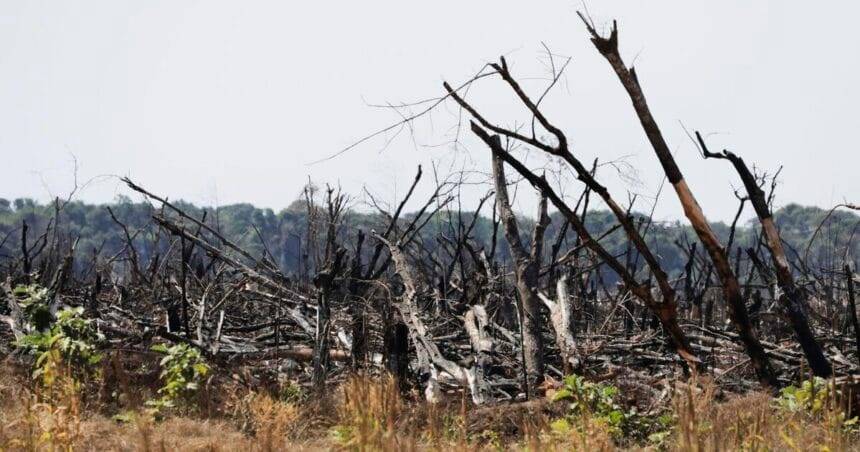
विश्व स्तर पर, 6.37m हेक्टेयर 2023 में जंगल ख़त्म हो गएऔर 2024 के वन घोषणा आकलन के अनुसार, लगभग सभी उष्णकटिबंधीय क्षेत्रों में वनों की कटाई को कम करने के लक्ष्य चूक गए।
2022 में और भी अधिक जंगल – 62.6 मिलियन हेक्टेयर – नष्ट हो गए (जिसका अर्थ है कि एक क्षेत्र निम्न पारिस्थितिक अखंडता वर्ग में गिर गया)।
कुल मिलाकर, दुनिया अपने वनों की कटाई के लक्ष्य से 45% पीछे है, और, एक निराशाजनक मोड़ में, प्रतिज्ञा के बाद से वन-हानि का स्तर 2018-2020 की आधार रेखा से ऊपर बढ़ गया है।
वनों की कटाई का मुख्य चालक वस्तु उत्पादन है।
पिछले दो दशकों में, 57% स्थायी वन हानि गोमांस, सोया और पाम तेल जैसी कृषि वस्तुओं के उत्पादन के कारण हुई है, उस उत्पादन का लगभग 20% से 25% निर्यात किया गया है।
इन उत्पादों की मांग बढ़ी ही है. यूरोपीय संघ और चीन 2020 से 2022 तक कृषि वस्तुओं के प्रत्यक्ष व्यापार में सन्निहित सभी वनों की कटाई के 40% के लिए जिम्मेदार थे।
इस बीच, खनन और सेलूलोज़ से बने कपड़े विस्कोस का उत्पादन उभरते खतरे हैं।
हालांकि कुछ वस्तुओं में वृद्धि के पीछे स्थायी इरादे हैं – विस्कोस को पर्यावरण-अनुकूल के रूप में विपणन किया गया है, और धातुओं और दुर्लभ-पृथ्वी तत्वों की भूख आंशिक रूप से ऊर्जा संक्रमण से प्रेरित है – यह एक अनुस्मारक है कि खपत, हरा या नहीं, होगा कार्बन सिंक और प्राकृतिक पारिस्थितिक तंत्र पर प्रभाव पड़ता है।
लगभग 40% विस्कोस उन स्रोतों से आता है जो वनों की कटाई से जुड़े होने की संभावना रखते हैं।
हालाँकि, इंडोनेशिया में जहां निकल खनन के खतरे पर बहुत अधिक ध्यान दिया गया है, पाम तेल अब तक का सबसे बड़ा खतरा बना हुआ है।
आपूर्ति श्रृंखलाओं से वनों की कटाई को खत्म करने के प्रयास काफी हद तक स्वैच्छिक कॉर्पोरेट प्रतिबद्धताएँ हैं।
हालाँकि इन प्रतिज्ञाओं ने बातचीत को आगे बढ़ाया है और ट्रेस करने योग्य विस्कोस के विकास में मदद की है, लेकिन यह स्पष्ट है कि वे पर्याप्त गति से परिणाम देने के लिए पर्याप्त नहीं हैं।
यही कारण है कि नीति विशेषज्ञ और वन अधिवक्ता समान रूप से वर्षों से उपभोक्ता देशों में मांग-पक्ष विनियमन – अनिवार्य रूप से वनों की कटाई से जुड़े सामानों के आयात पर प्रतिबंध – पर जोर दे रहे हैं।
हालाँकि इस दिशा में काफ़ी प्रगति हुई है, लेकिन अब राष्ट्र अपने पैर पीछे खींचते नज़र आ रहे हैं।
इस नवीनतम रिपोर्ट को ध्यान में रखते हुए, यह विशेष रूप से भयावह लगती है।
उदाहरण के लिए, यूरोपीय संघ के वनों की कटाई विनियमन (ईयूडीआर) को लें, जिसमें सात वस्तुएं शामिल हैं: मवेशी, कोको, कॉफी, तेल पाम, रबर, सोया, और लकड़ी – और उनके डेरिवेटिव (ग्लिसरॉल, सोयाबीन, चमड़ा, आदि)।
इस साल 30 दिसंबर से लागू होने के कारण, मध्यम और बड़े ऑपरेटरों और व्यापारियों के लिए, नए नियमों के लिए उन उत्पादों का व्यापार करने वाली कंपनियों को यह सुनिश्चित करने की आवश्यकता होगी कि सामान हाल ही में वनों की कटाई (कानूनी समाशोधन सहित), गिरावट, या उल्लंघनों से उत्पन्न न हों। स्थानीय पर्यावरण और सामाजिक कानूनों का.
फिर भी, अक्टूबर की शुरुआत में एक चौंकाने वाले मोड़ में, यूरोपीय आयोग ने ईयूडीआर के कार्यान्वयन में अगले 12 महीनों के लिए देरी करने का प्रस्ताव अपनाया, इसके एक सप्ताह बाद उसने कहा कि उसकी ऐसा करने की कोई योजना नहीं है।
इस बीच, सुपरमार्केट ने यूके से अपने स्वयं के लंबे समय से वादा किए गए वनों की कटाई विरोधी कानून को आगे बढ़ाने का आग्रह किया है, उनका कहना है कि होल्डअप बाजार में अनिश्चितता पैदा कर रहे हैं और खुदरा विक्रेताओं के स्वयं के प्रयासों को कमजोर कर रहे हैं।
वन देशों में छोटे किसानों पर विनियमन के प्रभावों के बारे में उचित चिंताएं हैं, जिनके अनुपालन के लिए संसाधनों की कमी होने पर उन्हें वैश्विक बाजार से बाहर रखा जा सकता है।
किसी भी देरी का उपयोग इन क्षेत्रों में क्षमता निर्माण में मदद करने और राष्ट्रीय ट्रेसेबिलिटी सिस्टम का समर्थन करने के लिए उत्पादक रूप से किया जाना चाहिए, ताकि जब नियम लागू हों, तो छोटे धारक लाभ उठा सकें।
ऐसा जोखिम है कि स्थगन का उपयोग ईयूडीआर को कमजोर करने या इसे पूरी तरह से ख़त्म करने के लिए किया जाएगा। वह एक गलती होगी।
आयात विनियमन से सब कुछ हल नहीं होगा। जर्नल में प्रकाशित एक अध्ययन इस साल की शुरुआत में पाया गया कि ब्राज़ीलियाई अमेज़ॅन में वनों की कटाई का मुख्य आर्थिक चालक घरेलू बाज़ार है, जो अंतरराष्ट्रीय मांग से उत्पन्न वनों की कटाई को लगभग तीन गुना करने के लिए ज़िम्मेदार है।
लेकिन यह उत्पादक देशों में विनियमन और प्रथाओं को प्रभावित करेगा, जिसका दुनिया भर में वन आपूर्ति श्रृंखलाओं पर सकारात्मक असर होना चाहिए, जो अंतरराष्ट्रीय मांग का लगभग तीन गुना है।
एक बार जब प्राथमिक वन ख़त्म हो गए, तो यह हमेशा के लिए ख़त्म हो गए, अपने साथ कीमती कार्बन भंडार और जैव विविधता के आश्रय स्थल भी ले गए।
जो अब तक खोखले शब्द रहे हैं, उन्हें सुधारने में समय बर्बाद करने का कोई समय नहीं है।
- लारा विलियम्स जलवायु परिवर्तन को कवर करने वाली ब्लूमबर्ग ओपिनियन स्तंभकार हैं
Complete News In English(पूरी खबर – अंग्रेज़ी में)
After nearly three years, the call for transformative action seems hollow.
Globally, 6.37 million hectares of forest were lost in 2023, and according to the 2024 forest assessment, nearly all tropical regions missed their targets for reducing deforestation.
In 2022, even more forest—62.6 million hectares—was destroyed, bringing some areas into low ecological integrity status.
Overall, the world is 45% behind its deforestation targets, and disappointingly, the level of forest loss has increased above the baseline set between 2018-2020 since the pledges were made.
The main driver of deforestation is commodity production.
Over the past two decades, 57% of permanent forest loss has been due to producing agricultural commodities like beef, soy, and palm oil, around 20% to 25% of which is exported.
The demand for these products has only risen. From 2020 to 2022, the EU and China accounted for 40% of the direct trade in agricultural commodities linked to all deforestation.
Meanwhile, mining and the production of viscose, a fabric made from cellulose, are emerging threats.
While some increases in production are backed by sustainable intentions—viscose is marketed as eco-friendly, and the demand for metals and rare-earth elements is partially driven by the energy transition—it’s a reminder that consumption, whether green or not, impacts carbon sinks and natural ecosystems.
About 40% of viscose comes from sources likely linked to deforestation.
However, in Indonesia, where nickel mining is under scrutiny, palm oil remains the largest threat.
Efforts to eliminate deforestation from supply chains largely depend on voluntary corporate commitments.
While these pledges have advanced discussions and aided the development of traceable viscose, it’s clear they are not producing results at a sufficient pace.
This is why policy experts and forest advocates have long highlighted the need for demand-side regulations in consumer countries—essentially, bans on the import of products linked to deforestation.
Although there has been significant progress in this direction, nations now appear to be backtracking.
In light of this latest report, the situation looks particularly dire.
For example, consider the EU Deforestation Regulation (EUDR), which covers seven products: cattle, cocoa, coffee, palm oil, rubber, soy, and wood—and their derivatives (like glycerol, soybeans, leather, etc.).
Starting December 30 of this year, new rules will require companies trading in these products to ensure that their goods do not result from recent deforestation (including legal clearance), degradation, or non-compliance with local environmental and social laws.
Yet, in a shocking turn of events earlier this month, the European Commission proposed delaying the implementation of the EUDR for the next 12 months, just a week after stating they had no such plans.
In the meantime, supermarkets in the UK are urging the government to advance its long-promised anti-deforestation laws, arguing that the delay is creating uncertainty in the market and undermining retailers’ own efforts.
Concerns about the impacts of regulation on small farmers in forested countries are valid, as they may be excluded from the global market if they lack resources to comply.
Any delay should be used productively to build capacity in these areas and support the implementation of national traceability systems, so when the rules are enacted, smallholders can benefit.
There is a risk that the delay will be exploited to weaken or completely abolish the EUDR. That would be a mistake.
Import regulations won’t solve everything. A study published in the journal earlier this year found that the main economic driver of deforestation in the Brazilian Amazon is the domestic market, which is responsible for nearly three times the deforestation driven by international demand.
But it will affect regulations and practices in producer countries, which should have a positive impact on forest supply chains worldwide, which are nearly three times as large as international demand.
Once primary forests are gone, they are gone forever, taking with them valuable carbon storage and habitats for biodiversity.
There is no time to waste in turning hollow words into action.
- Lara Williams is a Bloomberg Opinion columnist covering climate change.