


Main Points In Hindi (मुख्य बातें – हिंदी में)
Here are the main points from the provided text regarding the use of agricultural drones in modern farming in India:
-
Promoting Modern Agricultural Techniques: The central government is focusing on modern agricultural technologies, including the use of agricultural drones, to increase productivity, profitability, and cost-efficiency for farmers.
-
Drone Didi Scheme and ICAR Initiatives: The government has initiated the Drone Didi scheme and partnered with the Indian Council of Agricultural Research (ICAR) and the World Bank to train over 500,000 students as drone pilots, adapting agricultural education curricula to global standards.
-
Significant Cost and Time Savings: Drones significantly reduce the cost of spraying pesticides (by Rs 1,000 to Rs 2,000 per acre) and save farmers time, completing tasks in minutes compared to hours with traditional methods.
-
Career Opportunities and Entrepreneurial Growth: Training programs are providing new career paths, like drone piloting, and entrepreneurial opportunities in the drone industry, as exemplified by students like Gayatri who aspire to start their own businesses.
- Supporting Crop Maintenance: Drones help maintain crop production by allowing timely spraying, especially beneficial for farmers facing delays, ensuring that overall productivity is not hampered.
Main Points In English(मुख्य बातें – अंग्रेज़ी में)
Here are the main points from the provided text:

-
Adoption of Modern Agricultural Techniques: The central government is promoting modern farming methods, emphasizing the use of agricultural drones to enhance productivity, reduce costs, and make farming more profitable for farmers.
-
Training Initiatives: The Indian Council of Agricultural Research (ICAR), in collaboration with the World Bank, is running an Agricultural Drone Project, training over 5 lakh students in advanced technologies such as GPS and data analytics, ultimately increasing career opportunities in the agricultural sector.
-
Financial Benefits of Drones: Using drones for agricultural tasks significantly reduces costs and saves time. Spraying pesticides with drones can save Rs 1000 to Rs 2000 per acre compared to traditional methods, and it drastically reduces the time taken for spraying from hours to just minutes.
-
Job Creation and Entrepreneurship: The project has not only assisted numerous entrepreneurs but has also created over 500 jobs, leading to substantial annual business opportunities, averaging around Rs 92 lakh.
- Real-life Impact: Success stories, such as that of Gayatri, a B.Sc. (Hons) Agriculture student who became a certified drone pilot, illustrate the transformative impact of these training programs on individuals and the agricultural industry as a whole.
Complete News In Hindi(पूरी खबर – हिंदी में)
फसल उत्पादन को लाभकारी बनाने और किसानों की लागत को कम करने के लिए, केंद्रीय सरकार आधुनिक कृषि तकनीकों के उपयोग पर जोर दे रही है। इनमें कृषि ड्रोन सबसे प्रमुख तकनीक बनकर उभरे हैं। किसानों को ड्रोन के उपयोग से समय और लागत दोनों में बचत हो रही है। इस संदर्भ में, केंद्र सरकार ड्रोन दीदी योजना भी चला रही है। वहीं, भारतीय कृषि अनुसंधान परिषद (ICAR) ने विश्व बैंक के साथ मिलकर कृषि ड्रोन परियोजना शुरू की है, जिसके तहत 5 लाख से अधिक छात्र ड्रोन पायलट बन रहे हैं।
विश्व बैंक और ICAR ने 77 कृषि विश्वविद्यालयों के पाठ्यक्रम को अंतरराष्ट्रीय मानकों के अनुसार ढाला है। 5,14,000 से अधिक छात्रों को आधुनिक प्रयोगशालाओं में प्रशिक्षित किया जा रहा है, जहां उन्हें GPS, ड्रोन, दूरस्थ संवेदन तकनीक, डेटा एनालिटिक्स, रोबोटिक्स और आर्टिफिशियल इंटेलिजेंस का उपयोग सिखाया जा रहा है। यह परियोजना किसानों के लिए खेती के तरीकों को विकसित करने में मदद कर रही है, जिससे खेती अधिक लाभकारी हो सके। इस परियोजना ने 90 से अधिक उद्यमियों की मदद की है और 500 से अधिक नौकरियों का निर्माण किया है। इसके कारण सालाना 92 लाख रुपये का औसत व्यवसाय किया जा रहा है।
गायत्री एक छात्रा से ड्रोन पायलट बनी
विश्व बैंक के अनुसार, तमिलनाडु कृषि विश्वविद्यालय, कोयंबटूर की B.Sc. (ऑनर्स) कृषि की छात्रा गायत्री टी ने ICAR की परियोजना के तहत एक छात्रा से ड्रोन पायलट बनने का सफर तय किया है। गायत्री ने कहा कि मैंने कृषि के लिए ड्रोन ऑपरेट करना सीखा और पौधों की सुरक्षा हेतु रसायनों और पोषक तत्वों का उपयोग किया। इस प्रशिक्षण ने मुझे ड्रोन उद्योग में नए करियर के अवसर प्रदान किए हैं। वह अब प्रशिक्षक बनने की तैयारी कर रही है और अपनी खुद की ड्रोन व्यवसाय शुरू करने का सपना देखती है।
कृषि छात्रा से ड्रोन पायलट बनी!
मिलिए गायत्री टी. से, जो https://t.co/PUrmTw64rq के (ऑनर्स) कृषि छात्रा हैं, जिनका करियर एक ड्रोन पायलट प्रशिक्षण कार्यक्रम के जरिए आगे बढ़ा, जिसे @WorldBank और @ICARIndia द्वारा समर्थन दिया गया।
“मैंने सीखा कि… pic.twitter.com/7mUvHAFjH7
— विश्व बैंक भारत (@WorldBankIndia) 7 अक्टूबर 2024
ड्रोन के साथ समय और लागत की बचत
ड्रोन कंपनी Agriwings के CEO विदुर वर्मा ने कहा कि ड्रोन का उपयोग न केवल खेती की लागत को कम करता है, बल्कि किसानों का समय भी बचाता है। इसके अलावा, अगर बुवाई या छिड़काव में देरी होती है, तो ड्रोन का उपयोग फसल उत्पादन को बनाए रखने में भी मदद करता है। उन्होंने कहा कि ड्रोन टेक्नोलॉजी के माध्यम से 1 एकड़ में दवाइयों या कीटनाशकों के छिड़काव में लगभग 8 घंटे का समय बचता है। वहीं, छिड़काव की लागत 2000 रुपये प्रति एकड़ तक बचाई जा सकती है।
1 एकड़ क्षेत्र में छिड़काव की लागत और बचत
1 एकड़ खेत में ड्रोन से छिड़काव की लागत आमतौर पर 500 से 1000 रुपये के बीच होती है। हालांकि, यह सेवा प्रदाता और क्षेत्र पर निर्भर करता है। वहीं, पारंपरिक छिड़काव में श्रम लागत प्रति एकड़ 1500 से 3000 रुपये के बीच होती है। इससे यह स्पष्ट है कि ड्रोन से छिड़काव करने पर 1000 से 2000 रुपये की बचत होती है।
बुवाई या छिड़काव में देरी होने पर ड्रोन फायदेमंद
यदि समय की बचत पर नजर डालें, तो एक एकड़ खेत में ड्रोन से छिड़काव करने में 8 से 10 मिनट लगते हैं। वहीं, पारंपरिक तरीके से छिड़काव करने में लगभग 5 से 8 घंटे लगते हैं। इस प्रकार, समय की भी बचत होती है। जो किसान देर से बुवाई या छिड़काव करते हैं, उन्हें इससे अधिक लाभ होता है और इसका उत्पादन पर कोई नकारात्मक प्रभाव नहीं पड़ता।
यह भी पढ़ें –
Complete News In English(पूरी खबर – अंग्रेज़ी में)
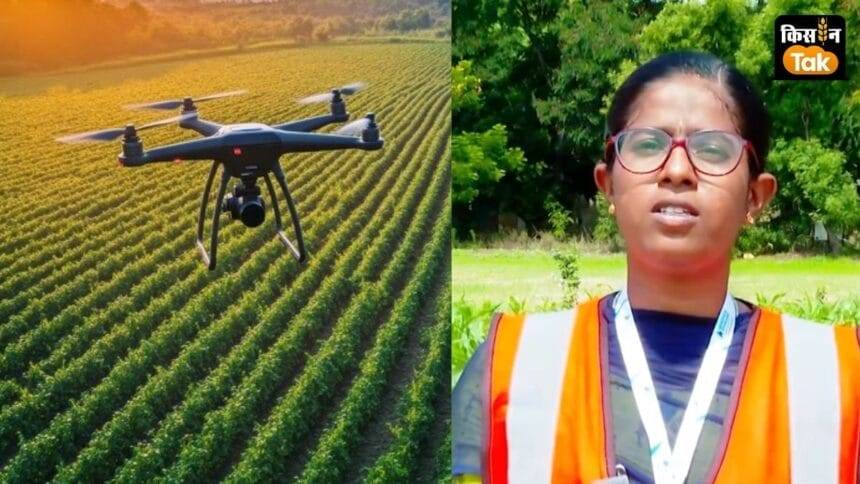
To make farming a profitable deal and increase production as well as reduce the costs of farmers, the central government is emphasizing on the use of modern agricultural techniques. Agricultural drones have emerged prominent among these technologies. Farmers are getting many benefits from the use of drones including saving time and cost of farming. The central government is also running the Drone Didi scheme in this regard. Whereas, the Indian Council of Agricultural Research (ICAR) is running the Agricultural Drone Project in collaboration with the World Bank, under which more than 5 lakh students are being made drone pilots.
The World Bank Organization and the Indian Council of Agricultural Research (ICAR) have adapted the curriculum of 77 agricultural universities to world standards. More than 5,14,000 students are being trained in modern labs. Where, they are being taught to use GPS, drones, remote sensing technology, data analytics, robotics and artificial intelligence. So that, by developing farming methods, it can be more profitable for the farmers. This project of the World Bank and ICAR has helped more than 90 entrepreneurs, while creating more than 500 jobs. Due to this, an average business of Rs 92 lakh is being done annually.
Gayatri became a drone pilot from a student
According to the World Bank Organization, Tamil Nadu Agricultural University, Coimbatore’s B.Sc., which became part of the project of the Indian Council of Agricultural Research (ICAR). (Hons) Agriculture student Gayatri T has traveled from a student to a drone pilot. Student Gayatri said that I learned to operate drones for agriculture, used chemicals and nutrients for plant protection. This training has opened up new career opportunities for me in the growing drone industry. She said that now she is preparing to become a trainer and she dreams of starting her own drone business.
From Agriculture student to Drone Pilot!
Meet Gayathri T., a https://t.co/PUrmTw64rq(Hons) Agriculture student from TNAU, Coimbatore, whose career took off thanks to a drone pilot training program supported by the @WorldBank and @ICARIndia through #NAHEP,
“I learned to… pic.twitter.com/7mUvHAFjH7
— World Bank India (@WorldBankIndia) October 7, 2024
Saving time and expenses with drones
Vidur Verma, CEO of drone firm Agriwings, said that the use of drones not only reduces the cost of farming but also saves the farmer’s time. Apart from this, in case of delay in sowing or spraying, use of drones also helps in maintaining crop production. He said that about 8 hours of time per acre is saved in spraying medicines or pesticides through drone technology. Whereas, spraying cost can be saved up to Rs 2000 per acre.
Cost and savings from spraying in 1 acre field
The cost of spraying 1 acre of field with a drone usually ranges from Rs 500 to Rs 1000 per acre. However, it also depends on the service provider and area. Whereas, in manual or traditional spraying, the labor cost per acre ranges from Rs 1500 to Rs 3000. It also depends on the use of pump or knapsack sprayer and labor rates. Seen this way, spraying with a drone saves Rs 1000 to Rs 2000.
Drone beneficial in case of delayed sowing or spraying
If we look at time saving, it takes 8 to 10 minutes to spray one acre of field with a drone. At the same time, spraying by manual or traditional method takes about 5 to 8 hours. If seen this way, time is also saved. Those farmers get more benefit whose sowing is done late or whose spraying is delayed. This does not affect the production.
Read this also –