

Main Points In Hindi (मुख्य बातें – हिंदी में)
इस अध्ययन के मुख्य बिंदु निम्नलिखित हैं:
-
शोध का उद्देश्य: अध्ययन में 3डी प्रिंटेड किडनी मॉडल का उपयोग करके लचीली यूरेटेरोस्कोपी (एफयूआरएस) के दौरान इंट्रारेनल दबाव (आईआरपी) और सिंचाई प्रवाह की सुरक्षा का विश्लेषण किया गया है।
-
पद्धति: 3डी-मुद्रित सिलिकॉन मॉडल पर विभिन्न ऊचाई (60, 90, 120, 150, 180 सेमी) के साथ गुरुत्वाकर्षण-आधारित सिंचाई और मैन्युअल पंपिंग का उपयोग किया गया।
-
परिणामों का विश्लेषण: विभिन्न शीथ आकारों और एफयूआरएस आकारों का परीक्षण किया गया, जिसमें आईआरपी विभिन्न स्थितियों में मापा गया। विभिन्न संयोजनों के साथ आईआरपी 1.5 से 25.5 cmH2O के बीच पाया गया।
-
निष्कर्ष: 180 सेमी से नीचे निलंबित पानी की ऊँचाई के साथ विभिन्न एफयूआरएस/यूएएस संयोजनों का उपयोग करना सुरक्षित है; हालाँकि, विशिष्ट fURS/UAS संयोजन के साथ मैन्युअल पंपिंग के दौरान आईआरपी सुरक्षित सीमा से बढ़ता है।
- स्रोत: अध्ययन के लिए प्रकाशित लेख का लिंक यहां उपलब्ध है।
Main Points In English(मुख्य बातें – अंग्रेज़ी में)
Here are the main points from the provided text:

-
Research Overview: The study titled "Comparison of Safety of Flexible Ureteroscopy with Different Irrigation Methods in a 3D Printed Kidney Model" analyzes intra-renal pressure (IRP) and irrigation flow during flexible ureteroscopy (FURS) using a 3D-printed kidney model.
-
Methodology: Researchers utilized a silicone model to simulate the kidney, adjusting water height and manual pressure during FURS. They monitored the renal pelvis pressure under various conditions to evaluate the effects of sheath sizes (12Fr and 14Fr) and different FURS dimensions (7.5, 8.5, and 9.5Fr).
-
Findings on INP: The results indicated that different combinations of sheath sizes and FURS led to varying levels of IRP. For instance, the use of a 12Fr sheath with a 9.5Fr FURS showed IRP levels ranging from 8.4 to 17.5 cmH2O, while adding a 200-um laser fiber reduced the IRP to 6.4-10.5 cmH2O.
-
Safe Operating Parameters: The study concluded that using FURS and sheath combinations below a water height of 180 cm maintained IRP within safe limits. However, certain combinations (specifically 9.5Fr/12Fr) with manual pumping exceeded safe IRP thresholds.
- Source Reference: The findings are published in the journal Urology and can be accessed through the provided link: BMUrol.
Complete News In Hindi(पूरी खबर – हिंदी में)
फोटो साभार: पिकोविट44
नवंबर 2024 के अंक में प्रकाशित “3डी प्रिंट किडनी मॉडल में विभिन्न सिंचाई विधियों के साथ लचीली यूरेटेरोस्कोपी की सुरक्षा की तुलना” का सारांश निम्नलिखित है। उरोलोजि बाई एट अल द्वारा.
शोधकर्ताओं ने 3डी-मुद्रित किडनी मॉडल में लचीली यूरेटेरोस्कोपी (एफयूआरएस) के दौरान पानी की ऊंचाई और मैन्युअल दबाव को समायोजित करके इंट्रारेनल दबाव (आईआरपी) और सिंचाई प्रवाह का विश्लेषण करने के लिए एक पूर्वव्यापी अध्ययन किया।
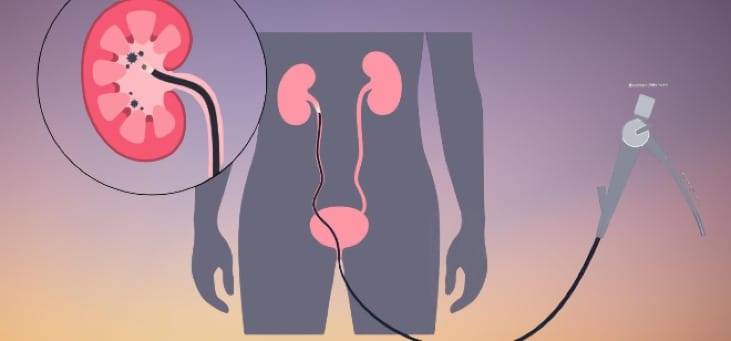
एक 3डी-मुद्रित सिलिकॉन मॉडल ने किडनी का अनुकरण किया, जिसमें यूरेटरल एक्सेस शीथ (यूएएस) यूरेटरपेल्विक जंक्शन पर जुड़ा हुआ है। केंद्रीय शिरापरक दबाव ट्यूबिंग ने अलग-अलग परिस्थितियों में गुर्दे की श्रोणि के दबाव की निगरानी की। 12Fr और 14Fr के शीथ आकारों का परीक्षण क्रमशः 7.5, 8.5, और 9.5Fr के fURS आकारों के साथ किया गया। गुरुत्वाकर्षण-आधारित सिंचाई लागू की गई, जिसमें पानी की ऊँचाई 60, 90, 120, 150 और 180 सेमी निर्धारित की गई, जबकि मैन्युअल पंपिंग ने अधिकतम आईआरपी मापी।
परिणामों से पता चला कि 12Fr शीथ और 9.5Fr fURS के साथ, IRP 8.4-17.5 cmH2O था, जो मैन्युअल पंपिंग के साथ 60 cmH2O से अधिक था। 200-um लेजर फाइबर जोड़ने से IRP 6.4-10.5 cmH2O तक कम हो गया, और एक पत्थर की टोकरी ने इसे घटाकर 4.0-5.0 cmH2O कर दिया। 9.5Fr fURS के साथ 14Fr शीथ का उपयोग करने से IRP घटकर 2.5-6.0 cmH2O (मैन्युअल पंपिंग के साथ 17 cmH2O) हो गया। 12Fr शीथ और 7.5Fr fURS के साथ, IRP 5.4–8.2 cmH2O था, जो मैन्युअल पंपिंग के साथ बढ़कर 25.5 cmH2O हो गया। 14Fr शीथ और 7.5Fr fURS का उपयोग करते हुए, IRP 1.5-4.3 cmH2O था, जो मैन्युअल पंपिंग के साथ 9.0 cmH2O तक पहुंच गया।
अध्ययन ने निष्कर्ष निकाला कि 180 सेमी से नीचे निलंबित पानी की ऊंचाई के साथ विभिन्न एफयूआरएस/यूएएस संयोजनों का उपयोग करके आईआरपी एक सुरक्षित सीमा के भीतर रहा। हालाँकि, उन्होंने पाया कि विशिष्ट fURS/UAS (9.5Fr/12Fr) कॉम्बो के साथ मैन्युअल पंपिंग सुरक्षित IRP सीमा से अधिक है।
स्रोत: bmcurol.biomedcentral.com/articles/10.1186/s12894-024-01638-x
Complete News In English(पूरी खबर – अंग्रेज़ी में)
Photo Credit: Picovital44
The summary of the article titled “Comparison of the Safety of Flexible Ureteroscopy with Different Irrigation Methods in a 3D Printed Kidney Model,” published in the November 2024 issue, is as follows.
Urology
by Bhai et al.
Researchers conducted a retrospective study to analyze intrarenal pressure (IRP) and irrigation flow by adjusting water height and manual pressure during flexible ureteroscopy (FURS) in a 3D printed kidney model.
A 3D-printed silicone model simulated the kidney, with a ureteral access sheath (UAS) connected at the ureteropelvic junction. Central venous pressure tubing monitored the renal pelvis pressure under different conditions. The sheath sizes of 12Fr and 14Fr were tested with FURS sizes of 7.5, 8.5, and 9.5Fr. Gravity-based irrigation was applied, setting water heights at 60, 90, 120, 150, and 180 cm, while manual pumping measured the maximum IRP.
Results showed that with a 12Fr sheath and 9.5Fr FURS, the IRP ranged from 8.4-17.5 cmH2O, exceeding 60 cmH2O with manual pumping. Adding a 200-um laser fiber lowered the IRP to 6.4-10.5 cmH2O, while a stone basket reduced it further to 4.0-5.0 cmH2O. Using a 14Fr sheath with 9.5Fr FURS resulted in an IRP of 2.5-6.0 cmH2O (17 cmH2O with manual pumping). With a 12Fr sheath and 7.5Fr FURS, the IRP was 5.4–8.2 cmH2O, increasing to 25.5 cmH2O with manual pumping. A 14Fr sheath and 7.5Fr FURS yielded an IRP of 1.5-4.3 cmH2O, reaching 9.0 cmH2O with manual pumping.
The study concluded that different combinations of FURS/UAS with a suspended water height below 180 cm maintained IRP within a safe range. However, they found that the specific FURS/UAS combo (9.5Fr/12Fr) with manual pumping exceeded safe IRP limits.
Source:
bmcurol.biomedcentral.com/articles/10.1186/s12894-024-01638-x