


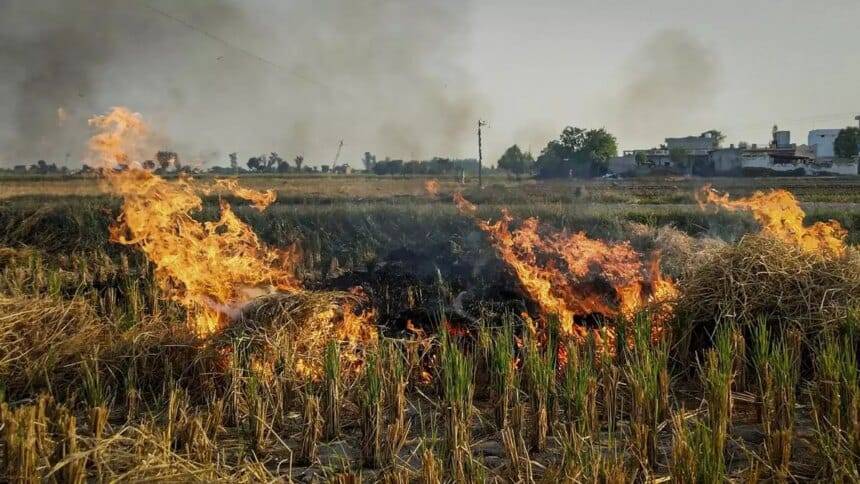
Main Points In Hindi (मुख्य बातें – हिंदी में)
-
पराली जलाने की घटनाओं में गिरावट: 15 सितंबर से 3 नवंबर, 2023 के बीच पराली जलाने की घटनाओं में 53% की कमी आई, जो 9,730 मामले हैं, जबकि पिछले वर्ष में यह संख्या 20,728 थी।
-
राज्यों में असमानता: जबकि पंजाब और हरियाणा में पराली जलाने की घटनाओं में कमी आई, उत्तर प्रदेश और राजस्थान में घटनाओं की संख्या में वृद्धि हुई है।
-
पंजाब का विशेष ध्यान: पंजाब में 4,132 पराली जलाने की घटनाएं हुईं, जो कुल घटनाओं का 68% है, जबकि यह पिछले वर्ष की तुलना में 68% कम है।
-
फसल कटाई का प्रभाव: कृषि विशेषज्ञों के अनुसार, पराली जलाने की घटनाओं की संख्या फसल कटाई के समय पर निर्भर करती है, और अंतिम आंकड़े सत्र के अंत (30 नवंबर) में महत्वपूर्ण होंगे।
- क्षेत्रीय अंतर: अलग-अलग राज्यों में फसल की कटाई की स्थिति अलग है, जैसे पंजाब और हरियाणा में धान की फसल का 60% से अधिक कट चुका है, जबकि मध्य प्रदेश में यह प्रतिशत 25-35% है।
Main Points In English(मुख्य बातें – अंग्रेज़ी में)
Here are the main points from the article:
-
Decrease in Stubble Burning Incidents: Between September 15 and November 3 of this year, stubble burning incidents in India decreased by 53%, from 20,728 to 9,730. However, specific states like Uttar Pradesh and Rajasthan saw an increase in incidents.
-
Majority of Incidents in Punjab: The Indian Agricultural Research Institute (IARI) reported 4,132 cases of crop residue burning in Punjab, accounting for 68% of all cases. This is a slight decrease from the previous year but still represents a significant portion of stubble burning activity.
-
State-Specific Trends: While Punjab and Haryana both reported reductions in stubble burning (68% in Punjab and 38% in Haryana), Uttar Pradesh and Rajasthan experienced increases, with Uttar Pradesh’s incidents rising by 17% and Rajasthan’s by 9%.
-
Area Affected by Stubble Burning: It was noted that around 4.6 lakh hectares in Punjab were reported for stubble burning, with the majority of incidents concentrated in three districts: Patiala, Amritsar, and Ludhiana.
- Impact of Harvesting Seasons: Agricultural experts pointed out that the trends in stubble burning are significantly influenced by the timing of the rice harvest. This year’s timing differs from previous years, affecting the overall stubble burning statistics as the farming season progresses.

Complete News In Hindi(पूरी खबर – हिंदी में)
इस साल 15 सितंबर से 3 नवंबर के बीच पराली जलाने की घटनाओं में 53 प्रतिशत की गिरावट दर्ज की गई और यह 9,730 रह गई, जबकि एक साल पहले की अवधि में यह 20,728 थी। हालाँकि, उत्तर प्रदेश और राजस्थान में घटनाओं की संख्या में वृद्धि हुई है।
भारतीय कृषि अनुसंधान संस्थान (IARI) या पूसा संस्थान द्वारा प्रबंधित कंसोर्टियम फॉर रिसर्च ऑन एग्रोइकोसिस्टम मॉनिटरिंग एंड मॉडलिंग फ्रॉम स्पेस (CREAMS) के अनुसार, इस साल अब तक पंजाब में फसल अवशेष जलाने के 4,132 मामले हुए हैं, जो कि 68 प्रतिशत है। एक साल पहले की अवधि में पूसा संस्थान की उपग्रह निगरानी टीम द्वारा पकड़ी गई 12,813 घटनाओं से एक प्रतिशत कम।
- यह भी पढ़ें: हरियाणा में पराली अधिक और पंजाब में कम क्यों जलाई जाती है?
सूत्रों के अनुसार, पंजाब में लगभग 4.6 लाख हेक्टेयर (एलएच) क्षेत्र में पराली जलाने की सूचना मिली है, जिसमें से एक तिहाई क्षेत्र तीन जिलों पटियाला, अमृतसर और लुधियाना (1.53 एलएच) से आया है। यहां तक कि राज्य में पराली जलाने की कुल घटनाओं में इन तीन जिलों की हिस्सेदारी 26 फीसदी तक है.
इसी तरह, हरियाणा में फसल अवशेष जलाने के केवल 857 मामले थे, जो कि एक साल पहले की अवधि में 1,372 घटनाओं से 38 प्रतिशत कम है। मध्य प्रदेश में भी कथित तौर पर 47 प्रतिशत कम होकर 2,369 घटनाएं हुईं, जबकि एक साल पहले यह संख्या 4,457 थी।
लेकिन आंकड़ों से यह भी पता चलता है कि उत्तर प्रदेश में पराली जलाने की घटनाओं की संख्या 1,102 साल पहले की तुलना में 17 प्रतिशत बढ़कर 1,288 हो गई और राजस्थान में 982 से 9 प्रतिशत बढ़कर 1,072 हो गई।
- यह भी पढ़ें: पराली जलाने की घटनाओं में 17% की कमी, लेकिन NCR में हवा की गुणवत्ता हुई खराब
एक पूर्व कृषि विशेषज्ञ ने बताया, “पराली जलाने के मामलों में गिरावट या वृद्धि धान की फसल के समय पर निर्भर करती है, जो फिर से रोपाई की अवधि से निर्धारित होती है, क्योंकि तुलना हमेशा साल पहले की अवधि के मुकाबले होती है, जबकि कटाई का समय साल-दर-साल अलग-अलग हो सकता है।” आयुक्त. उन्होंने कहा कि सीजन के अंत (30 नवंबर) में घटनाओं की संख्या यह विश्लेषण करने के लिए महत्वपूर्ण होगी कि फसल अवशेष जलाने में वृद्धि हुई है या गिरावट।
आधिकारिक सूत्रों ने कहा कि हालांकि देश भर में धान की लगभग 26 प्रतिशत फसल की कटाई हो चुकी है, लेकिन उत्तरी राज्यों में यह अधिक है, जहां किसान गेहूं की बुआई के लिए खेत को जल्दी तैयार करने के लिए पराली जलाते हैं, जो राजस्थान में नवंबर के पहले सप्ताह से शुरू होती है। पंजाब, हरियाणा और पश्चिमी यूपी. मध्य प्रदेश और गुजरात में गेहूं की बुआई मध्य अक्टूबर से शुरू हो जाती है।
- यह भी पढ़ें: ‘सरकार को बाजरा उत्पादन क्षेत्रों की रक्षा करने की जरूरत’
आंकड़ों से पता चला है कि पंजाब में धान की 60-70 फीसदी फसल कट चुकी है, जबकि हरियाणा में 60 फीसदी, उत्तर प्रदेश में 45 फीसदी, मध्य प्रदेश में 25-35 फीसदी कटाई हो चुकी है. सूत्रों ने कहा कि पूर्वी और दक्षिणी राज्यों में, धान की फसल की कटाई अभी बाकी है, आंध्र प्रदेश, असम, पश्चिम बंगाल, छत्तीसगढ़, झारखंड, कर्नाटक और ओडिशा में यह 10 प्रतिशत से भी कम है। सूत्रों ने कहा कि तेलंगाना और बिहार में लगभग 15-16 प्रतिशत धान की कटाई हो चुकी है।
Complete News In English(पूरी खबर – अंग्रेज़ी में)
Between September 15 and November 3 of this year, incidents of stubble burning saw a significant decline of 53%, dropping to 9,730 cases from 20,728 during the same period last year. However, there has been an increase in stubble burning cases in Uttar Pradesh and Rajasthan.
According to the Consortium for Research on Agroecosystem Monitoring and Modeling from Space (CREAMS), managed by the Indian Agricultural Research Institute (IARI), Punjab reported 4,132 stubble burning incidents this year, marking a 68% decrease compared to last year’s 12,813 observed cases.
Sources indicate that about 460,000 hectares of land in Punjab were reported for stubble burning, with one-third of these incidents concentrated in three districts: Patiala, Amritsar, and Ludhiana, which account for 26% of the total incidents in the state.
In Haryana, stubble burning cases were recorded at only 857, down 38% from 1,372 cases last year. Madhya Pradesh also witnessed a reduction of 47%, with incidents falling to 2,369 from 4,457 the previous year.
Conversely, Uttar Pradesh saw a 17% increase in stubble burning cases, rising to 1,288 from 1,102 last year, while Rajasthan’s cases went up 9% from 982 to 1,072.
An agricultural expert noted that the fluctuation in these incidents often depends on the timing of rice harvesting, which varies from year to year. The final count of incidents by the end of the season (November 30) will be crucial for understanding whether the overall stubble burning has increased or decreased.
Official sources stated that approximately 26% of the country’s rice crops have been harvested thus far, with higher figures in northern states where farmers burn stubble to prepare the fields for wheat sowing, which begins in early November in Rajasthan, Punjab, Haryana, and western Uttar Pradesh. In Madhya Pradesh and Gujarat, wheat sowing begins in mid-October.
Data shows that around 60-70% of rice has been harvested in Punjab, 60% in Haryana, 45% in Uttar Pradesh, and 25-35% in Madhya Pradesh. In contrast, in eastern and southern states, harvesting remains limited, with less than 10% completion in states like Andhra Pradesh, Assam, West Bengal, Chhattisgarh, Jharkhand, Karnataka, and Odisha. In Telangana and Bihar, around 15-16% of the rice has been harvested.
Source link